
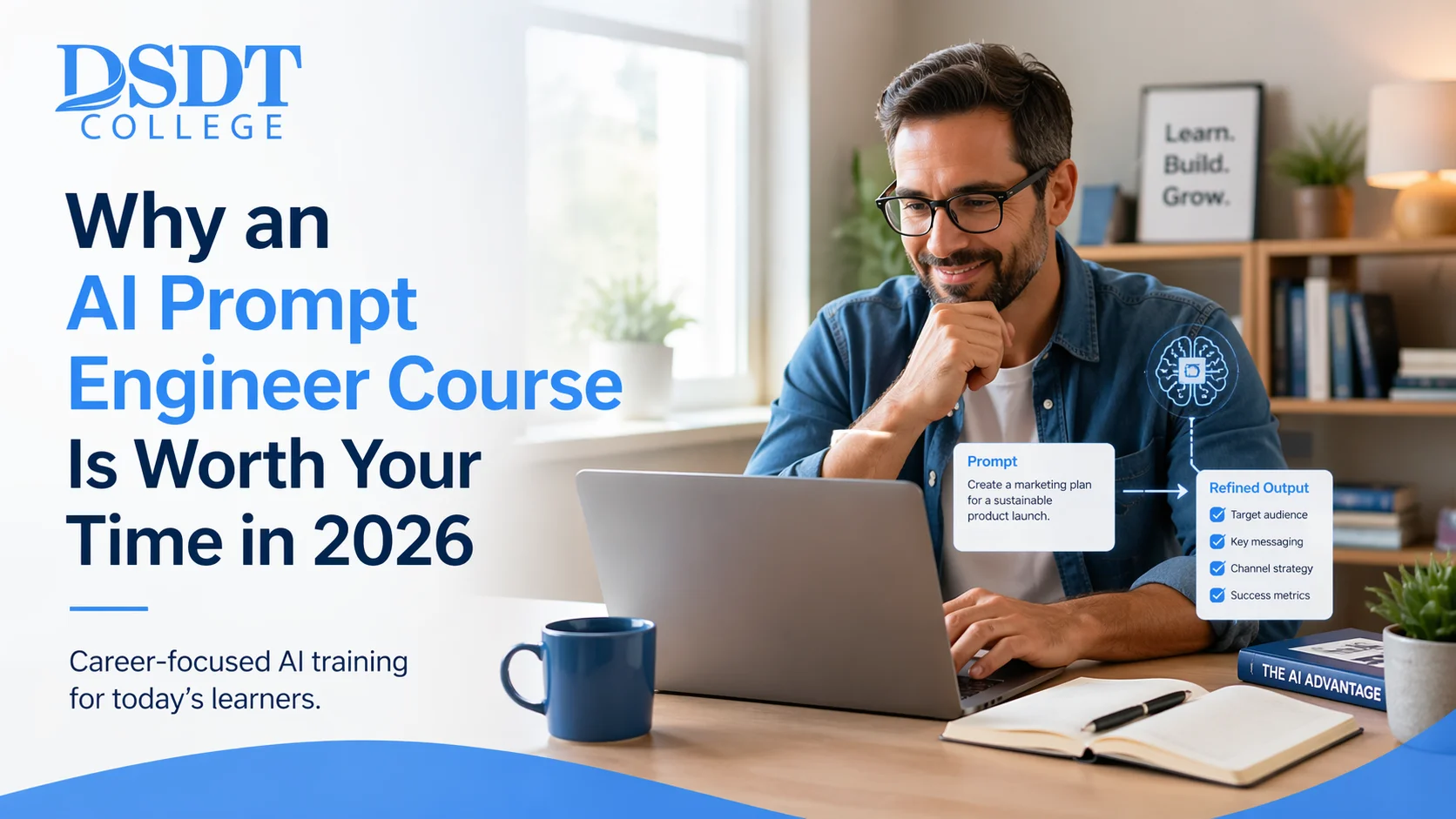
Why an AI Prompt Engineer Course Is Worth Your Time in 2026
An ai prompt engineer course teaches you how to communicate with AI models effectively — turning vague inputs into precise, powerful outputs. Whether you are looking for a foundational overview or an intensive professional bootcamp, the right training can transform your career trajectory.
Prompt engineering is the skill of crafting the right inputs to guide AI models toward the outputs you actually need. As generative AI reshapes industries — from marketing and software development to healthcare and finance — knowing how to talk to AI is becoming as important as knowing how to use a search engine.
With hundreds of thousands of learners already enrolling in foundational prompt engineering programs, the demand for this skill is undeniable. People are moving fast to master these tools to stay competitive in the evolving job market.
At DSDT College — a nationally accredited institution — we include AI Prompt Engineering as part of our career-focused technology programs. Our curriculum is specifically designed for veterans, military families, and career changers ready to break into the modern tech economy. With DSDT’s background in accelerated tech training, this guide will help you cut through the noise and find the right path forward.
The Fundamentals of Prompt Engineering and Career Growth
As we navigate through 2026, the hype around Generative AI (GenAI) has settled into a practical reality: it is a tool that requires a skilled operator. At its core, prompt engineering is the art and science of designing and optimizing inputs to guide Large Language Models (LLMs). Think of it as a “roadmap” for the AI. Without a clear map, the AI might wander into irrelevant territory; with a precise prompt, it delivers exactly what you need.
The architecture of an LLM relies on predicting the next token in a sequence. By providing strategic inputs, we aren’t just “asking a question” – we are influencing the model’s probability of generating a specific, high-fidelity response. This shift in human-computer interaction is creating a massive career boost across multiple sectors:
- Tech & Marketing: Professionals use prompts to generate SEO-optimized content, automate social media, and create personalized customer journeys.
- Data Science: AI assists in cleaning data, generating Python scripts, and interpreting complex datasets.
- Creative Media: From image generation to video scripts, AI is the new “co-pilot” for digital creators.
For those of us at DSDT College, we see this as a vital skill for our military veterans and career changers. Whether you are transitioning from active duty or looking to level up in a remote role, mastering an ai prompt engineer course ensures you aren’t replaced by AI, but rather, you’re the one leading it.
Essential Skills and Tools for 2026
To master this field, you need to be familiar with the latest tools and the underlying mechanics of natural language processing. In 2026, the landscape is dominated by sophisticated models like GPT-5, Google’s Vertex AI, and OpenAI’s o1 and o3-mini models.
Key concepts you’ll encounter include:
- Transformer Architecture: The “brain” behind modern LLMs that allows them to understand context and relationships between words.
- Token Management: Understanding how AI “counts” words and parts of words, which is crucial for staying within model limits and managing costs.
- Next-Token Prediction: The fundamental way AI builds sentences, which helps you understand why certain prompts lead to better flow than others.
Choosing the Right ai prompt engineer course for Your Career
With so many options available, choosing the right ai prompt engineer course depends on your goals, budget, and time. Are you looking for a quick overview or a deep-dive certification that carries weight on a resume?
Statistics show that learners are flocking to these programs, with high enrollment numbers and exceptional learner satisfaction rates across the industry. Shorter introductory programs have helped hundreds of thousands of learners claim foundational certificates.
What to Expect in a Beginner ai prompt engineer course
If you are just starting, a beginner-friendly course is your best bet. These usually require no prior coding experience and focus on the “anatomy” of a prompt: instructions, context, and constraints.
Most beginner courses take between 3 to 9 hours to complete. You’ll learn how to “steer” GenAI models and use professional prompt labs. The goal here is immediate application—taking what you learn in the morning and using it to finish your work tasks by the afternoon. These courses often conclude with a final project, such as building a prompt library for a specific business use case, and offer shareable certificates for your professional profile.
Maximizing ROI with a Professional ai prompt engineer course
For those looking to make a significant career pivot, a premium bootcamp or masterclass might be the right investment. These programs, often structured as intensive 6-week journeys, offer a deeper level of expertise.
What makes these worth the cost?
- Instructor Credentials: You’ll often learn from experts with decades of experience in Fortune 500 companies and government sectors.
- Industry Deep Dives: Instead of just learning how to write a poem, you’ll learn how to integrate AI into enterprise operations, change management, and technical design.
- Hands-on Mastery: These courses go beyond the basics to teach you how to avoid common pitfalls and “hype,” focusing instead on explosive growth and productivity.
Mastering Advanced Prompting Techniques and Tools
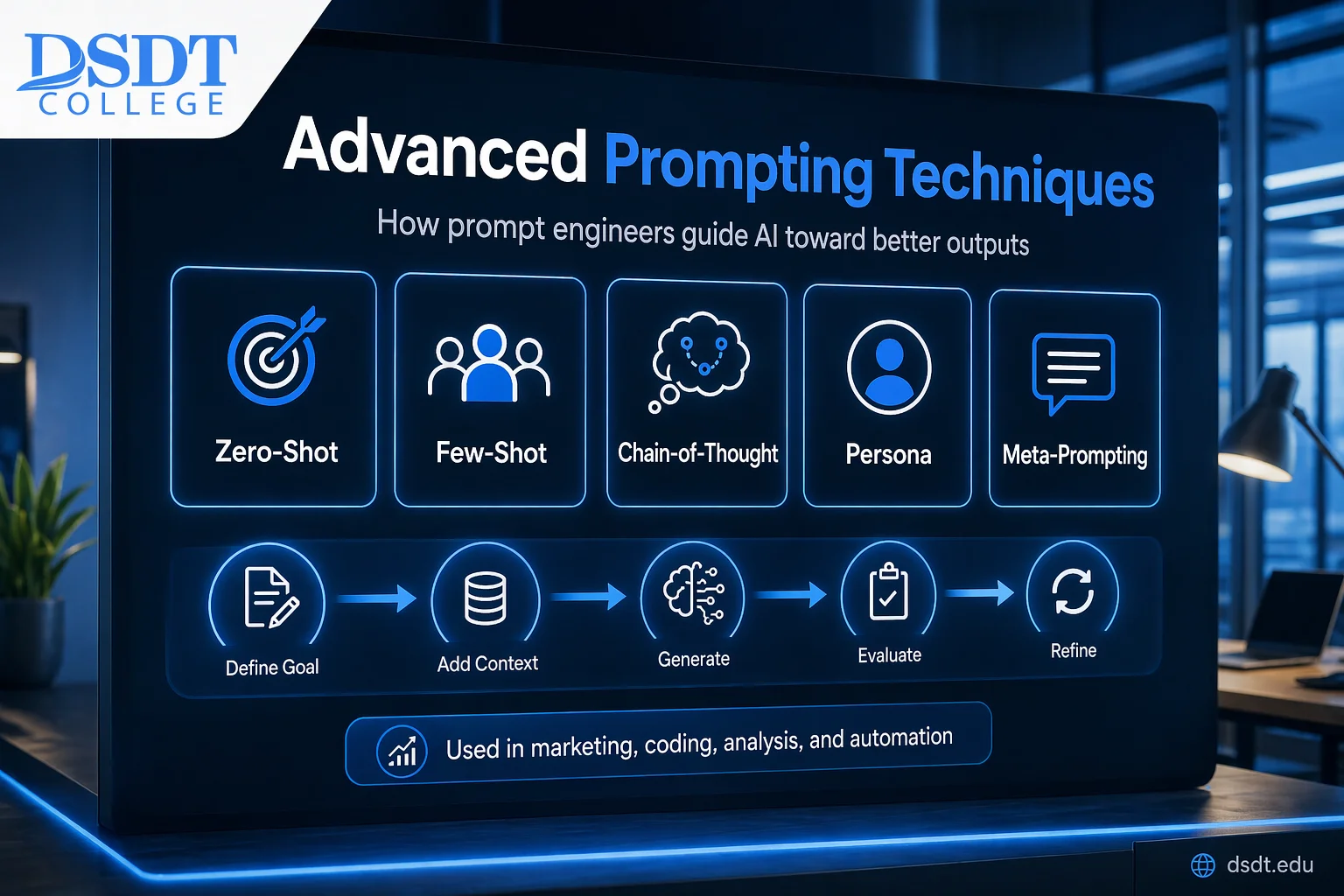
Once you have the basics down, an ai prompt engineer course will introduce you to the “pro” techniques that separate hobbyists from engineers. These strategies allow you to handle complex reasoning and multi-step tasks.
- Zero-shot Prompting: Giving the AI a task with no examples (e.g., “Translate this to French”).
- Few-shot Prompting: Providing a few examples of the input and desired output to “show” the AI the pattern you want.
- Chain-of-Thought (CoT): Asking the AI to “think step-by-step.” This is essential for math, logic, and complex coding.
- Persona Adoption: Telling the AI to “Act as a senior cybersecurity analyst” or “Act as an MRI technician.” This changes the tone and depth of the response.
- Meta-Prompting: Asking the AI to help you write a better prompt or to explain how it reached a certain conclusion.
Overcoming Challenges in Generative AI
No AI is perfect. A comprehensive ai prompt engineer course will spend significant time teaching you how to manage the “dark side” of GenAI:
- AI Hallucinations: When the model confidently states a fact that is completely false. You’ll learn to use “grounding” techniques and verification steps to minimize this.
- Bias Mitigation: Understanding that AI can reflect societal biases and learning how to write prompts that encourage neutrality and fairness.
- Data Ethics and Privacy: Especially important for our students in healthcare or IT, you must learn how to use AI without compromising sensitive data or violating transparency standards.
Industry-Specific Use Cases and Hands-on Practice
To truly master the craft, you need to move beyond theory and into practice. Professional platforms offer “gyms” where you can test prompts across different levels.
- Code Generation: Using AI to debug Java or complete Python functions. Technical guides for developers provide excellent insights into this niche.
- Content Creation: Moving beyond simple text to generate photorealistic images or SEO-heavy blog articles.
- Business Automation: Creating “AI Agents” that can handle customer support workflows or summarize long-form reports.
For those in specialized fields, targeted training for web developers or AI text generation provides the focused instruction needed for specific professional roles.
Strategies for Success: From Coursework to Career Mastery
Taking a course is just the beginning. Real mastery comes from what Reddit users call “repetitive practice and perseverance.” The consensus in the community is that while courses provide the foundation, the best prompt engineers are those who “learn by doing.”
We recommend a few strategies to stay ahead:
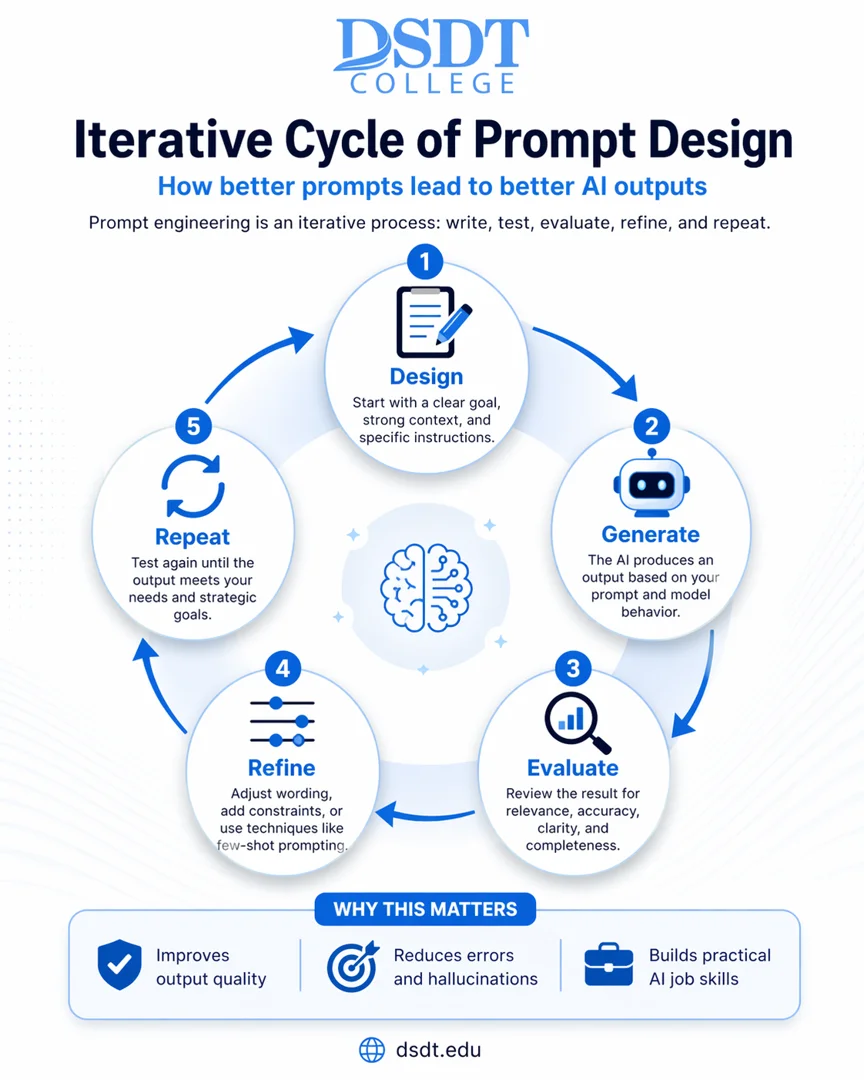
- Iterative Testing: Never settle for the first response. Tweak, refine, and test your prompts to see how small changes in wording affect the outcome.
- Community Resources: Join Discord servers, follow AI researchers on social media, and browse GitHub for prompt libraries.
- Feedback Loops: Use two chat sessions—one to test your prompt and another to ask the AI for feedback on how to improve that prompt.
Building a Professional Portfolio
In 2026, a certificate is a great start, but a portfolio of work is what gets you hired. When you complete an ai prompt engineer course, make sure you document your progress.
- LinkedIn Accomplishments: Add your certificates and specific skills (like “Chain-of-Thought Prompting”) to your profile.
- Real-World Projects: Show how you used AI to save hours at work or build a new project.
- Applied Concepts: Create a GitHub repository or a personal blog showcasing your most successful prompt “recipes.”
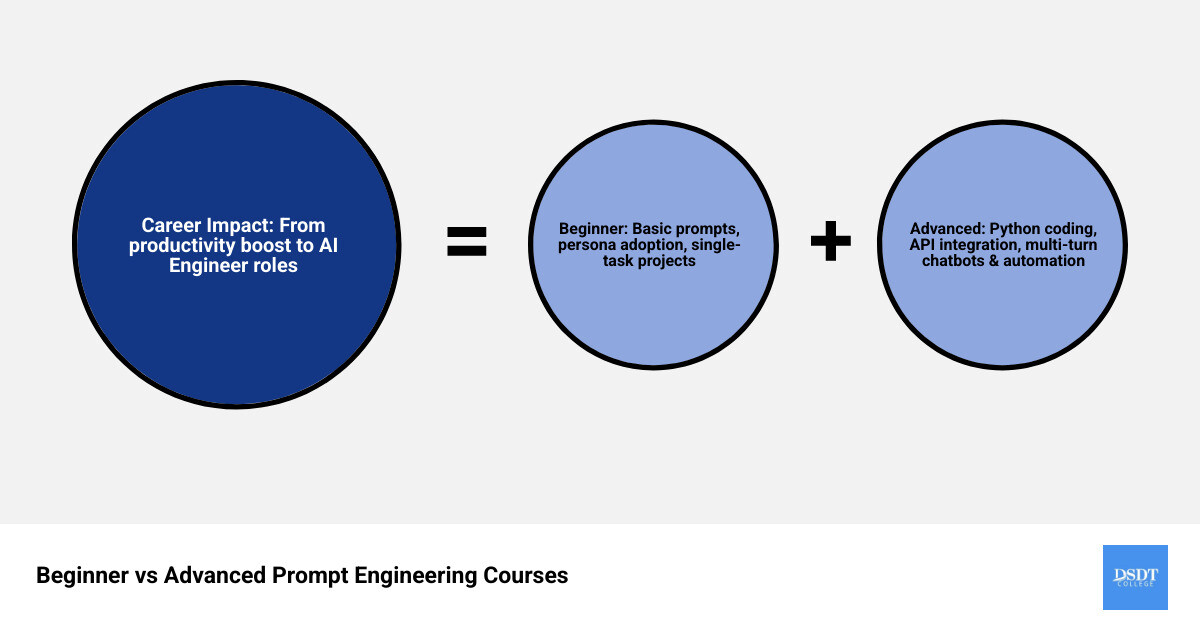
| Feature | Beginner Course Outcomes | Advanced Bootcamp Outcomes |
|---|---|---|
| Primary Goal | Understand what AI can do | Build production-ready AI agents |
| Skill Level | Persona adoption, basic text Gen | Python coding, API integration, LangChain |
| Project Type | Single-task prompts | Multi-turn chatbots & automation workflows |
| Career Impact | Productivity boost in current role | Qualified for “AI Engineer” or “Prompt Specialist” roles |
Frequently Asked Questions about AI Prompt Engineering
Do I need coding experience to take an AI prompt engineer course?
Not necessarily. Many foundational courses are designed for “zero-experience” beginners and focus on natural language. However, if you want to move into advanced “AI Engineering” or work with APIs, learning basic Python will be a significant advantage.
How long does it take to become proficient in prompt engineering?
You can learn the basics in as little as 3 to 9 hours. However, becoming a master who can handle complex business automation or code generation typically takes several weeks of consistent practice and experimentation.
Are prompt engineering certificates valuable for job seekers in 2026?
Yes! As companies look to integrate GenAI into their workflows, they need proof that employees can use these tools responsibly and effectively. A certificate from a recognized institution or program shows you have a structured understanding of the technology, which is much more valuable than just saying you “know how to use ChatGPT.”
Conclusion
Mastering the machine isn’t about becoming a computer yourself; it’s about becoming a better communicator. Whether you are a high school graduate looking for a rapid entry into tech, a veteran transitioning to a civilian career, or a professional looking to automate your daily grind, an ai prompt engineer course is a high-ROI step forward.
At DSDT College, we are committed to providing accessible, career-focused education that moves with you. Our online programs are designed to be mobile-friendly and flexible, ensuring that whether you are at home in Detroit or stationed across the country, you have access to the skills that define the future of work. With no SAT/ACT requirements and a deep commitment to military families, we make it easy to start your journey.
Ready to take the next step in your digital career? Explore DSDT Programs and Associate Degrees and discover how our accelerated paths can help you lead the AI revolution.