Graduation is an exciting milestone, but it’s also the beginning of a new journey. Whether you’re pursuing a career in technology, healthcare, digital marketing, AI, or another growing industry, preparing for your future before graduation can make a major difference in your job search.
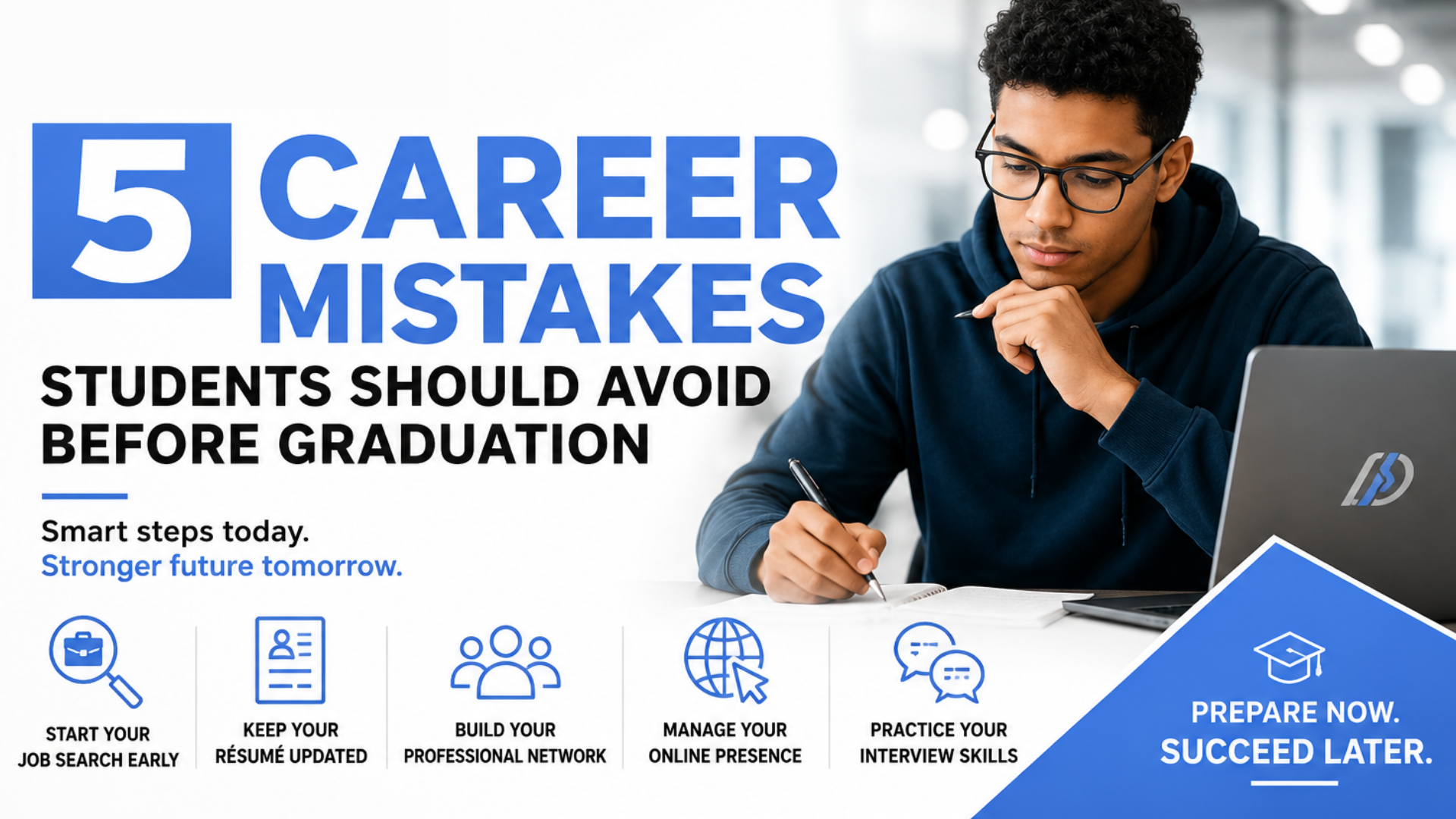
Many students focus entirely on completing coursework, but career preparation is just as important. Here are five common mistakes students should avoid before graduation—and what you can do instead to set yourself up for success.

1. Waiting Until Graduation to Start Your Job Search
One of the biggest mistakes students make is waiting until after graduation to begin exploring career opportunities.
Employers often look for candidates who are proactive and prepared. Starting your job search early allows you to research companies, connect with employers, attend networking events, and apply for positions before graduation.
Tip: Begin building your professional network and researching career opportunities several months before you complete your program.
2. Not Updating Your Résumé
Your résumé is often the first impression an employer has of you. An outdated résumé can make you miss valuable opportunities.
Be sure to include:
- Relevant coursework
- Technical or industry skills
- Projects and hands-on experience
- Certifications or training
- Volunteer or leadership experience
Review and update your résumé regularly to ensure it reflects your most recent accomplishments.
3. Overlooking Professional Networking
Many job opportunities come through connections and referrals. Networking does not have to be intimidating—it can be as simple as attending career events, connecting with professionals on LinkedIn, or speaking with instructors and classmates.
Building relationships now can lead to opportunities later.
Tip: Create or update your LinkedIn profile and connect with classmates, instructors, employers, and industry professionals.
4. Ignoring Your Online Presence
Employers often search online before contacting candidates. A professional online presence can help reinforce your skills and experience.
Make sure your social media accounts reflect the image you want employers to see. Consider creating a professional profile that highlights your education, projects, portfolio, and career interests.
Your digital presence is an extension of your résumé.
5. Not Practicing Interview Skills
Even highly qualified candidates can struggle if they are not prepared for interviews.
Practice introducing yourself, discussing your skills, explaining your career goals, and answering common interview questions. The more prepared you are, the more confident you will feel.
A simple 60-second introduction can help you make a strong first impression.
Final Thoughts
Graduation is more than completing classes—it is preparing for your next opportunity.
By starting your job search early, updating your résumé, networking, building a professional online presence, and practicing interview skills, you can enter the workforce with confidence.
The steps you take today can help create the career opportunities of tomorrow.