
What You Need to Know About ARRT Certification (Quick Answer)
ARRT certification is the gold-standard credential for medical imaging and radiation therapy professionals in the United States.
Here’s a quick snapshot of what it involves:
| Topic | Key Facts |
|---|---|
| What it is | A professional credential from the American Registry of Radiologic Technologists |
| Who it’s for | Radiographers, MRI techs, CT techs, radiation therapists, and more |
| Three requirements | Education, ethics, and examination |
| Two main pathways | Primary (entry-level) and Postprimary (for already-credentialed professionals) |
| Exam format | 220 multiple-choice questions, computer-based |
| Registrants | More than 360,000 certified professionals nationwide |
| Typical program length | About 2 years for primary credentials like Radiography |
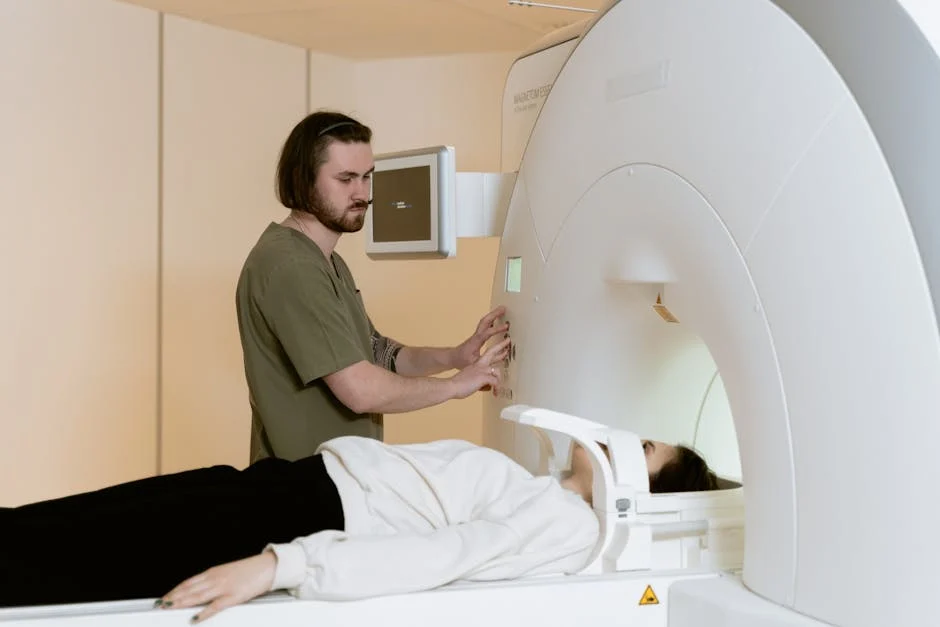
Whether you’re fresh out of high school, switching careers, or transitioning from the military into healthcare, ARRT certification opens the door to a stable, high-demand profession. Radiologic technologists use X-ray, MRI, CT, and other imaging equipment to help doctors diagnose and treat patients — and ARRT credentials are what most employers require to hire you for those roles.
This guide walks you through everything: what ARRT certification is, how to qualify, which pathway fits your situation, what the exam covers, and how to get started.
What is ARRT Certification and Why Does It Matter?
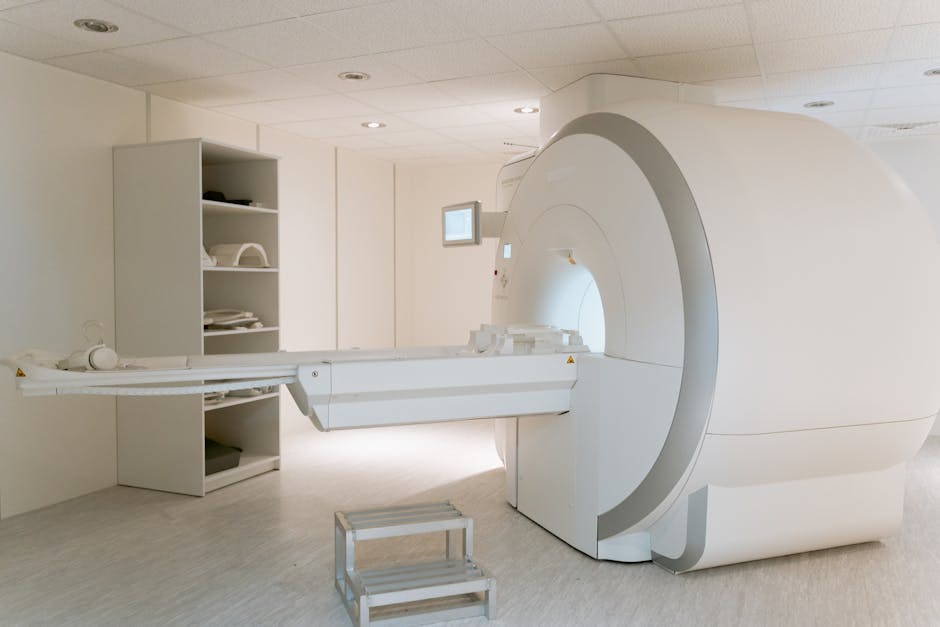
At its core, ARRT certification and registration is a credentialing process managed by the American Registry of Radiologic Technologists. It serves as a formal recognition that a professional has met the high standards of knowledge and skill required to perform medical imaging or radiation therapy safely and effectively.
Why should this be your top priority if you’re entering the field? For starters, it is the industry benchmark. More than 360,000 registrants currently hold ARRT credentials, and for good reason. Most healthcare employers in major hubs like Detroit, Chicago, and Houston require this certification as a condition of employment. It isn’t just a “nice to have” certificate; it is often the “must-have” key to getting your foot in the door at a hospital or imaging center.
Beyond just getting a job, ARRT certification is about patient safety and clinical excellence. For example, mammography professionals have played a vital role in healthcare; since 1990, mammography has helped reduce breast cancer deaths by nearly one-third. When you hold these credentials, you’re telling the world—and your patients—that you are committed to providing the highest level of care. You can learn more about the ARRT exam and how it validates these essential skills.
The Three Pillars of ARRT Eligibility
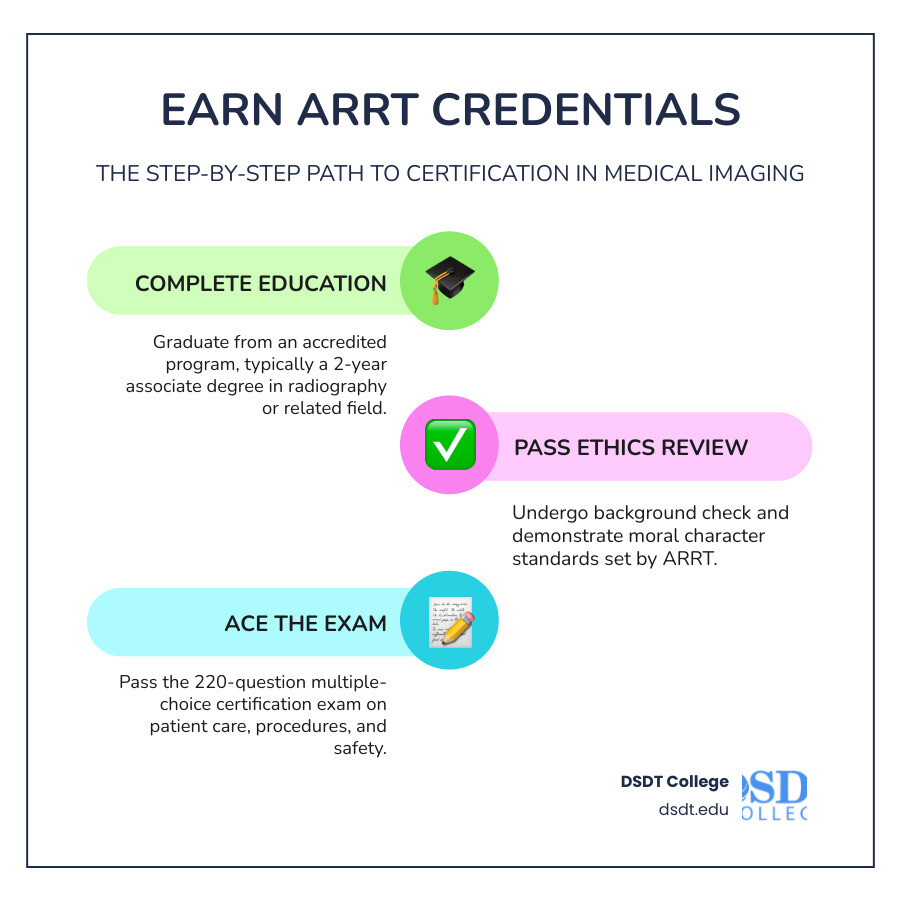
Earning your credentials isn’t just about passing a single test. We like to think of it as a three-legged stool. If one leg is missing, the whole thing falls over. To qualify for ARRT certification, you must satisfy three specific requirements: Education, Ethics, and Examination.
| Requirement | Primary Pathway | Postprimary Pathway |
|---|---|---|
| Education | Complete an ARRT-approved educational program (Associate degree or higher) | Hold an ARRT credential in a supporting discipline + complete structured education |
| Ethics | Pass a background check and agree to ARRT Standards of Ethics | Maintain good standing and comply with ethics requirements |
| Examination | Pass the comprehensive ARRT exam for your specific discipline | Pass the ARRT exam for the additional modality (e.g., CT or Mammography) |
Education and Ethics Requirements for ARRT Certification
The journey begins with an accredited educational program. For the primary pathway, you must complete a program that is specifically ARRT-approved and earn at least an Associate degree. This ensures you have the foundational knowledge in radiation physics, biology, and patient care.
The ethics component is equally critical. ARRT conducts a thorough review of every applicant’s “moral character.” This involves a background check to ensure you haven’t engaged in conduct that would compromise patient safety or the integrity of the profession. If you have concerns about a past incident, you can even request a pre-application ethics review to see if you’d be eligible before you spend years in school. You can find the full Initial Requirements for Earning ARRT Credentials on their official site.
The ARRT Certification Examination
Once your education and ethics are squared away, it’s time for the “big dance”: the exam. ARRT exams are computer-based and typically consist of about 220 multiple-choice questions.
The exam is designed to test entry-level clinical knowledge across four major content areas:
- Patient Care: Communication, infection control, and emergency procedures.
- Safety: Radiation protection for the patient and the technologist.
- Image Production: Technical factors, equipment operation, and image evaluation.
- Procedures: Anatomy, positioning, and the use of contrast media.
To get comfortable with the interface, you can practice with ARRT question formats before your test day. The goal is to prove you can provide safe, effective care from day one on the job.
Choosing Your Path: Primary vs. Postprimary Pathways
Understanding which “pathway” you are on is the most important step in planning your education. ARRT divides its credentials into two categories: Primary and Postprimary.
Primary Eligibility Disciplines
The Primary Pathway is for those just starting out or those pursuing a major modality that doesn’t require a prior imaging license. These programs are typically two years long and result in an Associate degree.
The most common primary disciplines include:
- Radiography (RT(R)): The traditional “X-ray” tech path and the most common entry point.
- Magnetic Resonance Imaging (MRI): Using magnetic fields instead of radiation.
- Nuclear Medicine Technology: Using radioactive tracers.
- Radiation Therapy: Treating cancer with high-energy radiation.
- Sonography: Using sound waves (ultrasound).
For those specifically looking at MRI, we offer a specialized MRI Technology Associate Degree that follows the ARRT Primary Pathway, allowing you to go straight into this high-tech field.
Postprimary Eligibility Disciplines
The Postprimary Pathway is for professionals who already hold an ARRT credential (or in some cases, ARDMS or NMTCB credentials) and want to specialize further. For example, a Radiographer (RT(R)) might want to become certified in Computed Tomography (CT) or Mammography.
To earn these, you don’t necessarily need another degree, but you do need:
- Supporting Credentials: You must already be certified in an approved “base” discipline.
- Structured Education: Specific coursework related to the new modality.
- Clinical Experience: A documented list of procedures you’ve performed. For instance, you can review the specific Clinical Experience Requirements for Mammography to see the level of detail required.
Navigating Costs, Clinicals, and Verification
Let’s talk about the “real world” side of getting your ARRT certification. It takes commitment—both in time and money.
Clinicals
The MRI Technology program includes structured clinical education designed to ensure students gain both hands-on patient experience and advanced simulation training. Clinical education begins in Semester 3 and continues through Semester 5. In Semester 3 (Clinical I), students complete a total of 270 clinical hours, including 200 hours of in-person clinical training at an approved MRI facility and 70 hours of simulation completed online. Semester 4 (Clinical II) also requires 270 total hours, consisting of 200 in-person clinical hours and 70 hours of simulation training. In Semester 5 (Clinical III), students complete 360 total clinical hours, including 260 in-person hours and 100 hours of simulation. Across these semesters, students complete a minimum of approximately 16 hours per week in clinical training, allowing them to progressively build competency in MRI procedures, patient care, and imaging protocols while meeting the program’s clinical education requirements.
Tuition and Costs
Tuition for Radiologic Technology programs varies wildly. While some community college programs might cost a few thousand dollars per semester, the national average for a full program is often estimated at around $30,000. Universities may charge more, while specialized career colleges like ours focus on providing practical, workforce-aligned training that gets you into the field faster.
Verification and Maintenance
Once you’ve earned that hard-won credential, you have to keep it. This involves:
- Annual Renewal: Paying a fee and confirming you still meet ethics standards.
- Continuing Education (CE): Completing 24 credits of approved education every two years to stay current with technology.
For employers, verifying your status is simple but strict. ARRT does not issue paper credential cards anymore because they are too easy to forge. Instead, employers use the official online directory, which is updated daily. If you need a formal document for an employer, you should Start a Request Verification on ARRT Letterhead through the official portal.
Frequently Asked Questions about ARRT
How long does it take to get ARRT certified?
For most people starting from scratch, it takes about two years. This includes the time to complete an Associate degree and the necessary clinical competency requirements. If you are pursuing a postprimary credential (like moving from X-ray to CT), it may take significantly less time—often 6 to 12 months of structured education and clinical practice.
Can I transfer prior college credits into an ARRT program?
Yes, in many cases! If you have a Bachelor’s degree in a field like Kinesiology or Biology, your credits for Anatomy & Physiology, Physics, and Math will likely transfer. However, having a degree doesn’t usually “skip” the radiologic-specific training. You will still need to complete the core imaging classes and the 2,000+ clinical hours required for ARRT certification. Also, keep in mind that many programs require science prerequisites to have been completed within the last five years.
How do I verify an ARRT certification status?
The best way is to use the ARRT online directory. It is the official source and is updated every 24 hours. Never accept a paper card as proof of certification. If a professional isn’t appearing in the directory, it might be because they requested to be excluded or their scores aren’t finalized yet. In those cases, use the official verification request tool which requires two identifiers like a Social Security number and Date of Birth.
Conclusion
The path to ARRT certification is rigorous, but the rewards are worth the effort. By meeting these high standards, you join a community of healthcare professionals dedicated to precision, safety, and patient care. Whether you are in Detroit, Grand Rapids, or Dallas, the demand for certified technologists continues to grow as medical technology advances.
At DSDT College, we are proud to support the next generation of imaging professionals. Our programs, including our MRI Technology Associate Degree, are designed to give you the hands-on training and technical knowledge needed to succeed in these high-demand industries. We serve everyone from high school grads to military veterans transitioning into civilian careers, offering the flexibility and support you need to reach your goals.
Ready to take the first step toward your new career? Explore our career programs and see how we can help you prepare for your ARRT journey today.