
From Service to Tech: The Fastest Path Into a Civilian IT Career
Veteran IT career programs give military members and their families a direct route into one of the fastest-growing industries in the world — often at little or no cost.
Here are the top options available right now:
| Program | Best For | Cost | Duration |
|---|---|---|---|
| DSDT Technology Professional | Entry-level IT certifications | GI Bill® accepted | Months |
| DSDT Cybersecurity (6-Month) | Advanced network security | GI Bill® accepted | 6 months |
| DSDT AI Prompt Specialist | AI and automation | Financial aid available | Flexible |
| DSDT Full Stack Developer | Software development | GI Bill® accepted | Flexible |
| DSDT IT Associate Degree | Comprehensive IT foundation | GI Bill® accepted | 18-24 months |
Transitioning out of military service is one of the biggest career moves you’ll ever make. The good news? Your discipline, technical aptitude, and problem-solving skills are exactly what the tech industry is looking for.
Many programs are fully covered by the Post-9/11 GI Bill® (Chapter 33), Veteran Readiness and Employment (VRE, Chapter 31), or offered through corporate initiatives by industry leaders. You can earn industry-recognized certifications — like CompTIA, CCNA, or CISSP — in as little as a few months.
This article walks you through the best programs available, who qualifies, how to pay for it, and what career outcomes to expect.
I’m Jamie Kothe, a veteran training program developer and workforce development specialist with experience building and scaling IT career pathways for transitioning service members. My work developing veteran IT career programs has shown me what separates programs that lead to real jobs from ones that don’t — and I’ll share exactly what to look for.
Understanding the Landscape of veteran IT career programs
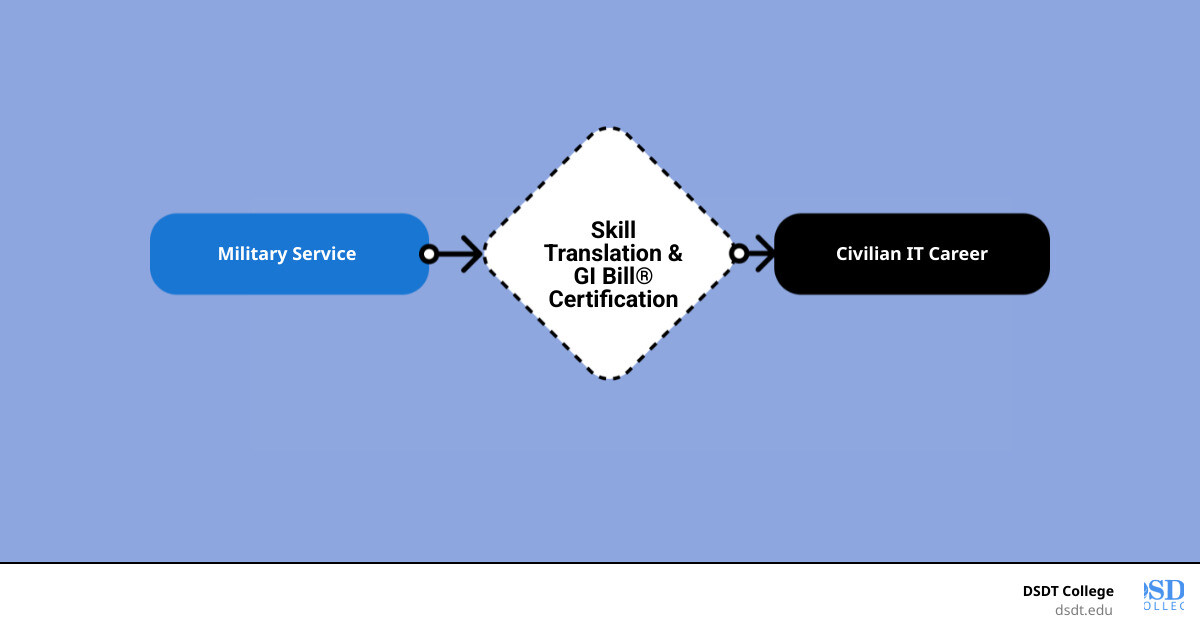
When we look at the current job market, the tech industry isn’t just growing; it’s exploding. For those of us coming from a military background, this represents a massive opportunity. The core of successfully navigating veteran IT career programs lies in “skill translation.” You might not think your time in the motor pool or the TOC translates to a server room, but the logic, troubleshooting, and high-stakes decision-making are identical.

Skill Translation and MOS Conversion
Every branch has Military Occupational Specialties (MOS), Ratings, or AFSCs that involve technical systems. Whether you were working on advanced avionics or secure communications, you already have a foundation in “systems thinking.” Many programs use military skills translators to help you see that your experience with radio encryption is the precursor to modern cybersecurity.
Corporate Fellowships and Industry Growth
Major tech players have recognized that veterans make incredible employees. Companies like Cisco and Microsoft have built specific pathways to bring military talent into their ecosystems. For example, Cisco has been recognized as a Top 10 Military Friendly Employer, specifically for its commitment to assisting the transition journey through skill development and job matching.
If you are just starting to explore your options, it is vital to learn more about VA education benefits to see what funding you have on the table. For those looking for a more structured academic route, you can also find more info about IT associate degrees that provide a broader credential alongside technical skills.
Foundational veteran IT career programs for Beginners
If you are brand new to “zeros and ones,” don’t sweat it. Many of the most successful people in tech started exactly where you are. The best way to start is by targeting entry-level roles like Help Desk or Junior Systems Support.
The industry “gold standard” for beginners involves earning foundational certifications:
- CompTIA A+: The industry standard for establishing a career in IT.
- Network+: Covers the configuration, management, and troubleshooting of common wired and wireless network devices.
- Cisco IT Essentials: Often a great starting point for learners with no previous tech work experience.
At DSDT College, we focus on these “building block” certifications because they lead directly to employment. You can find more info about technology professional training that covers these essentials in a format designed for adult learners.
Advanced Cybersecurity and Network Security Pathways
Once you have the basics down, or if you already have a technical background from your service, you can move into specialized high-tier tracks. This is where you find certifications like:
- CCNA (Cisco Certified Network Associate): Focused on network IP connectivity and security.
- CISSP (Certified Information Systems Security Professional): An elite certification for those aiming for management and architecture roles in security.
- CSSLP (Certified Secure Software Lifecycle Professional): For those focusing on building secure applications from the ground up.
For those ready to dive deep into these advanced topics over a more intensive period, check out more info about technology professional 6-month programs that can take you from intermediate to expert.
High-Demand IT Tracks: Cybersecurity, AI, and Cloud
The tech world moves fast, and right now, three areas are dominating the hiring landscape: Cybersecurity, AI, and Cloud Infrastructure. Choosing the right track depends on your interests and your previous military experience.
| Career Path | Primary Focus | Key Skills | Career Outcome |
|---|---|---|---|
| Software Development | Building applications | Python, Java, Full Stack | Software Engineer, Developer |
| Network Security | Protecting data/networks | CCNA, Firewalls, IP Services | Network Admin, Security Analyst |
| AI Specialist | Automation & Intelligence | Machine Learning, Prompts | AI Architect, Data Scientist |
Specialized Training in Generative AI
Artificial Intelligence is no longer science fiction. Specialized AI training programs are teaching veterans how to use Large Language Models (LLMs) and automation to future-proof their careers. This isn’t just about “chatting” with a bot; it’s about prompt engineering and integrating AI into business workflows.
If you want to be on the cutting edge, we offer more info about AI prompt specialist programs and more info about machine learning specialist programs to help you master these tools. Furthermore, combining AI skills with coding can be incredibly powerful, which is why many veterans explore more info about full stack developer programs.
Network Security and Cloud Infrastructure
Cloud computing is the backbone of the modern world. Whether it’s Azure, AWS, or private datacenters, companies need people who understand virtualization, server administration, and IP services. Accredited career programs offer pathways specifically in Server and Cloud Application, providing the hands-on experience needed for the modern workforce.
For those interested in the intersection of business and technology, you can find more info about business information technology specialist programs that bridge the gap between technical infrastructure and corporate operations.
Eligibility and Funding: Maximizing Your GI Bill® Benefits
One of the biggest hurdles for any career changer is cost. Fortunately, as a veteran, you have access to some of the best educational funding in the country.
Understanding Your Benefits
Most veteran IT career programs are designed to work with VA funding. Key chapters include:
- Post-9/11 GI Bill® (Chapter 33): Often covers 100% of tuition and provides a housing allowance (BAH).
- Veteran Readiness and Employment (VRE, Chapter 31): For veterans with a service-connected disability, focusing on employment outcomes.
- Survivors’ and Dependents’ Educational Assistance (DEA, Chapter 35): Benefits for the families of veterans who are permanently disabled or deceased due to service.
It is essential to verify which programs are approved. For instance, the technology programs at DSDT College are approved for VA/GI Bill® funding. To see how these apply to our programs, you can find more info about tuition and financial aid on our site.
Requirements for Active-Duty and Reservists
You don’t have to wait until you have your DD-214 in hand to start. Many programs are tailored for active-duty members in their last six months of service. This allows for a “SkillBridge” style transition where you can train while still receiving your military pay. Generally, you need an honorable or general discharge to be eligible for most veteran-specific benefits. For more on how to get started, check out more info about admissions.
Support for Military Spouses and Gold Star Families
We know that military service is a family commitment. That’s why many of these programs, including those at DSDT College, extend their training to military spouses and Gold Star families. IT is a perfect career for spouses because of its “portability” — you can take a cybersecurity or digital marketing job with you through every PCS.
If you are a spouse looking for a flexible, remote-friendly career, you might find more info about digital marketing programs to be the perfect fit for your lifestyle.
Career Outcomes: Fellowships and Job Placement Support
The ultimate goal of any training is a paycheck. The best veteran IT career programs don’t just teach you how to code; they teach you how to get hired.
Corporate Fellowships and Hands-on Experience
Many corporate fellowship programs provide a 12-week immersive experience where fellows gain real-world on-the-job training in areas like Cloud Infrastructure and Data Analytics. This “hands-on” time is often what tips the scale in a technical interview.
Leveraging veteran IT career programs for Long-Term Success
A good program offers more than just a certificate. Look for initiatives that provide:
- Lifetime Job Placement Assistance: Technology changes, and you might need help finding your second or third job.
- Mentorship: Connecting with veterans who are already established in the tech world.
- Resume and LinkedIn Support: Translating your “NCOER” or “OER” language into terms a civilian recruiter understands.
For those located near major installations, programs like the Fort Hood Career Skills Program (CSP) are invaluable. You can find more info about the Fort Hood CSP and how it facilitates direct entry into the workforce.
Skill Translation and Interview Preparation
The “soft skills” you learned in the military — leadership, punctuality, and the ability to work under pressure — are highly valued. However, you need to learn how to articulate them. Many programs now include “Applied Organizational Behavior” courses to help you navigate the different social dynamics of a civilian office.
Frequently Asked Questions about Veteran IT Programs
Are veteran IT career programs free?
Many specialized programs are offered at no cost to eligible veterans and spouses through corporate initiatives. Others are “free” in the sense that they are fully covered by your GI Bill® or VRE benefits, meaning you pay $0 out of pocket.
How long does it take to complete a veteran IT program?
It depends on the depth. Accelerated certificate tracks can take as little as 6 to 16 weeks. More comprehensive programs, like an Associate Degree in IT or Cybersecurity, typically take 18 to 24 months but provide a much broader educational foundation.
Can military spouses enroll in these IT programs?
Absolutely. Most major initiatives, including those from accredited career colleges, explicitly include spouses and even adult children in their eligibility criteria to support the entire military family.
Conclusion
Transitioning from the military to a civilian career is a mission in itself. By leveraging veteran IT career programs, you aren’t just getting a job; you’re building a career with high income potential and long-term stability.
At DSDT College, we are proud to serve the veteran communities in Detroit, Michigan, and across our many locations from Texas to Florida. We provide the hands-on learning and industry certifications you need to deploy your skills into the cloud. Whether you are interested in MRI technology, cybersecurity, or AI, we have a pathway designed for you.
Ready to take the next step? More info about all career programs is just a click away. Let’s get to work.