
Artificial intelligence is changing the workplace faster than ever. From generating content and analyzing data to automating repetitive tasks and helping employees solve problems, AI has quickly become a powerful tool for businesses across nearly every industry.
But as AI becomes more capable, one important question continues to come up:
Can artificial intelligence replace human creativity?
The answer is more complicated than simply choosing AI or humans.
While AI can generate ideas, recognize patterns, process information, and produce content in seconds, human creativity brings something AI cannot truly replicate: personal experiences, emotions, intuition, cultural understanding, and the ability to understand why an idea matters to another person.
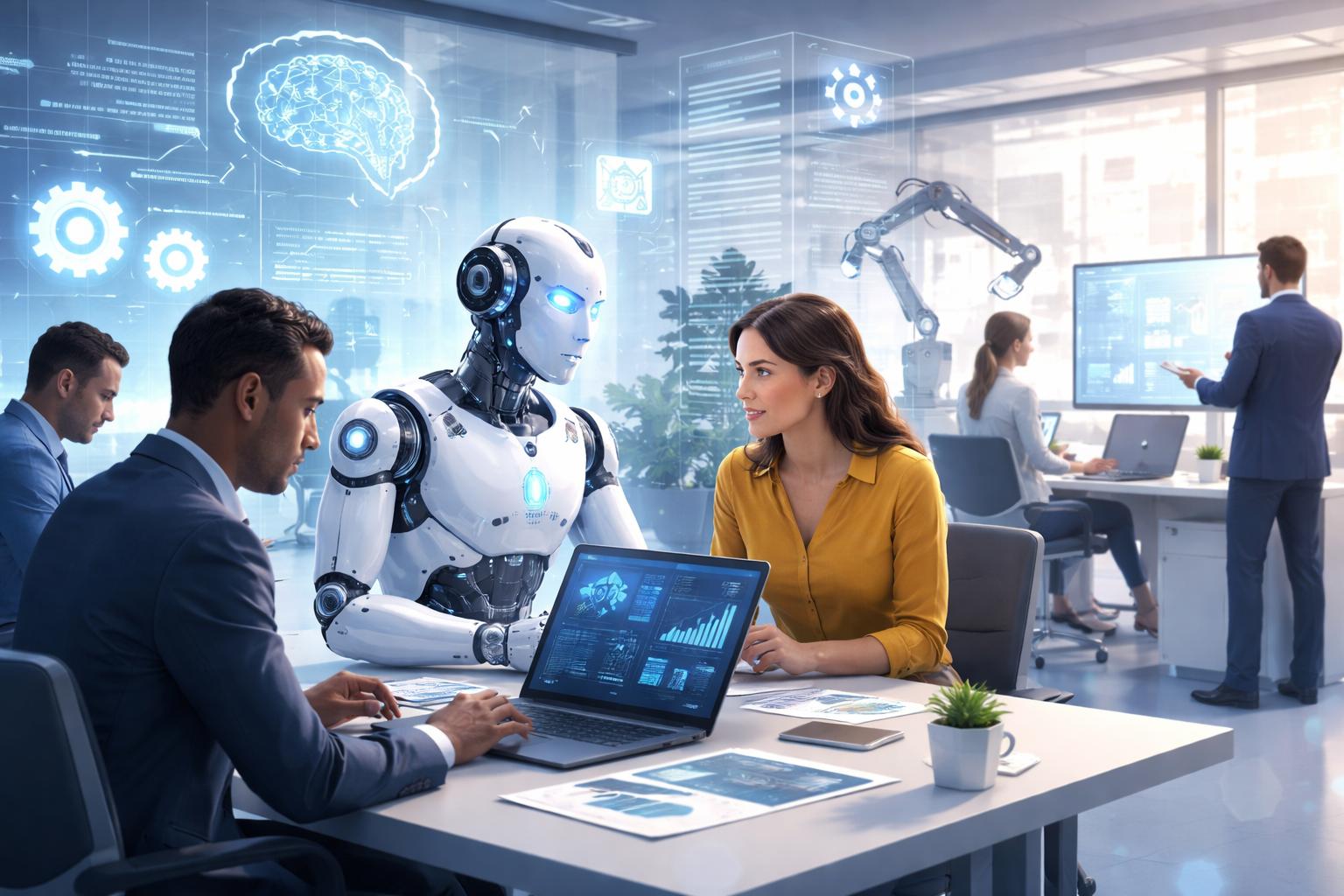
The future of work isn’t about AI replacing creativity. Instead, it’s about learning how AI and human creativity can work together.
What Does AI Bring to the Workplace?
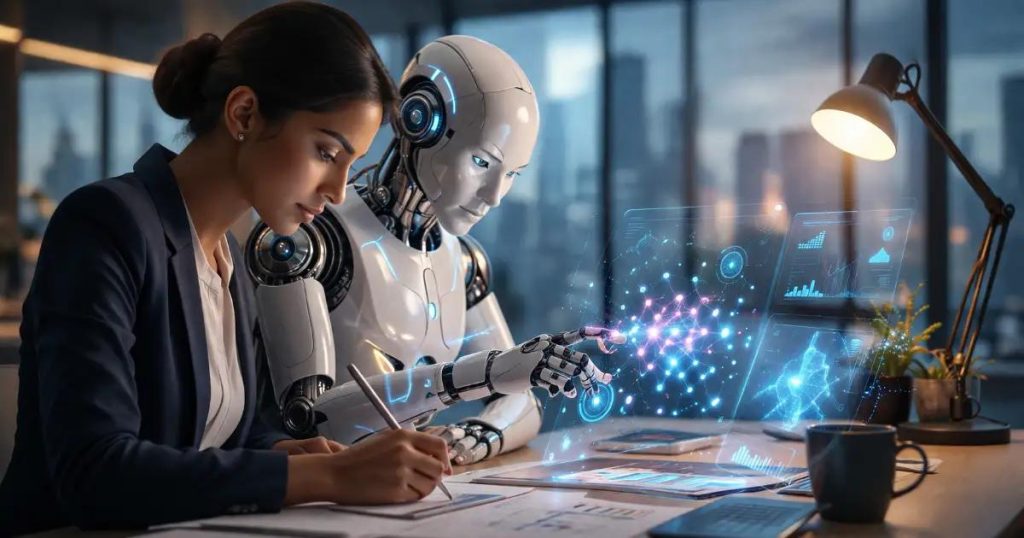
AI can help employees accomplish tasks faster and more efficiently. Instead of spending hours starting a project from scratch, professionals can use AI tools to brainstorm ideas, organize information, summarize research, analyze data, or create an initial draft.
For example, a digital marketing professional might use AI to:
- Brainstorm social media content ideas
- Analyze customer trends
- Create an initial blog outline
- Generate advertising concepts
- Summarize research
- Identify potential target audiences
- Organize large amounts of information
This doesn’t mean the professional simply accepts whatever AI produces.
AI can provide a starting point, but a human still needs to review the information, make decisions, add creativity, and ensure the final product actually connects with the intended audience.
AI can help create the possibilities. Humans decide which possibilities are worth pursuing.
Why Human Creativity Still Matters
Creativity isn’t simply the ability to make something look good or come up with an interesting idea.
Human creativity involves understanding people, experiences, emotions, and context.
A person can look at a problem and approach it from a completely unexpected perspective because of their experiences and knowledge. They can understand when something feels authentic, when a message sounds forced, or when an idea will connect with a particular audience.
For example, AI might be able to generate ten different social media captions for a business. However, a human marketer can recognize which caption actually sounds like the company’s brand and which one feels generic.
That human judgment is extremely valuable.
Creativity also plays an important role in industries that may not traditionally be considered “creative.” Business professionals, IT specialists, healthcare workers, cybersecurity professionals, and other employees all need to think creatively when solving problems.
AI Is a Tool, Not a Replacement for Thinking
One of the biggest mistakes employees can make is treating AI as an automatic answer machine.
AI can be incredibly useful, but it can also make mistakes, misunderstand information, or produce content that lacks originality.
That means professionals need to know how to work with AI rather than simply rely on it.
Instead of asking AI to do everything, employees can use it as a brainstorming partner or productivity tool.
For example:
Instead of:
“Write my entire marketing campaign.”
Try:
“Give me five campaign concepts targeting young adults interested in technology.”
The employee can then evaluate those ideas, combine concepts, make adjustments, and develop the final campaign.
This approach keeps human creativity at the center while using AI to make the process faster.
The Importance of Critical Thinking
As AI becomes more common in the workplace, critical thinking becomes even more important.
Employees need to be able to ask questions such as:
- Is this information accurate?
- Does this idea actually make sense?
- Is the content appropriate for the audience?
- Does this reflect the company’s brand?
- Is there a better way to approach the problem?
- What information might be missing?
These skills help employees avoid blindly accepting AI-generated results.
Knowing how to use AI is valuable, but knowing when to question AI may be just as important.
Creativity and AI in Digital Marketing
Digital marketing is one area where the combination of AI and human creativity is particularly powerful.
Marketing professionals constantly create content, analyze audiences, develop campaigns, manage social media, and find new ways to communicate with customers.
AI can help speed up many of these processes.
For example, AI can help a marketer identify trends or generate potential content ideas. The marketer can then take those ideas and turn them into something original that reflects the organization’s voice.
A successful campaign still requires an understanding of people.
A computer can analyze engagement numbers, but a human can ask:
Why did people connect with this message?
That difference matters.
Creativity and AI in Technology
Creative thinking is also becoming increasingly important in technology careers.
IT and cybersecurity professionals aren’t simply following instructions. They often need to troubleshoot unexpected problems, identify vulnerabilities, develop solutions, and think about how someone might approach a system differently.
Cybersecurity is a great example.
Security professionals need to think like defenders, but they also need to anticipate how systems could be attacked. That requires curiosity, problem-solving, and creative thinking.
AI can help analyze information and identify potential patterns, but humans still need to make decisions about how to respond.
The Workplace Is Looking for Both Skills
As technology continues to evolve, employers are looking for professionals who can combine technical knowledge with strong human skills.
Being able to use AI tools can make an employee more productive. Being able to communicate, solve problems, think critically, and generate original ideas makes that employee more valuable.
The combination is powerful.
Imagine two employees completing the same project.
One knows how to use AI but accepts every result without questioning it.
The other knows how to use AI, but also understands the audience, evaluates the information, challenges ideas, and improves the final product.
The second employee is using AI as a tool for creativity, rather than allowing AI to replace their creativity.
How Students Can Prepare for an AI-Powered Workplace
Students preparing for their careers don’t necessarily need to choose between technology skills and creative skills.
They should develop both.
Learning how to use AI tools can help students become more efficient and better prepared for modern workplaces. At the same time, developing communication, creativity, problem-solving, teamwork, and critical-thinking skills can help them stand out.
Students can start by:
1. Learn how AI works
You don’t need to become an AI engineer to benefit from understanding artificial intelligence. Learn what AI can do, where it can help, and what its limitations are.
2. Practice using AI responsibly
Experiment with AI tools for brainstorming, research, organization, and productivity while continuing to verify the information they provide.
3. Build creative skills
Practice writing, design, video production, storytelling, problem-solving, and other skills that require human decision-making.
4. Create projects
A portfolio can demonstrate how you apply technology and creativity to real-world problems.
5. Keep learning
Technology will continue to change. Professionals who are willing to learn new tools and adapt will be better prepared for the future.
The Future Isn’t AI vs. Humans
The conversation around artificial intelligence is often framed as a competition:
AI vs. humans.
But the workplace of the future may be less about competition and more about collaboration.
AI can process information quickly. Humans can understand emotion and context.
AI can generate possibilities. Humans can evaluate them.
AI can automate repetitive tasks. Humans can focus on strategy and innovation.
AI can help employees work faster. Humans determine what is worth creating.
The most successful professionals may not be the ones who avoid AI or rely on it completely. They may be the people who understand how to combine AI’s capabilities with their own creativity, judgment, and experience.
Final Thoughts
Artificial intelligence is changing what is possible in the workplace, but human creativity isn’t becoming less important.
In many ways, it may become even more valuable.
As AI takes care of more repetitive and time-consuming tasks, employees can spend more time solving problems, developing ideas, connecting with people, and creating meaningful work.
The goal isn’t to compete with AI.
It’s to learn how to work alongside it.
The professionals who can combine technology skills with creativity, critical thinking, communication, and problem-solving will be better prepared to adapt as the workplace continues to evolve.
At DSDT College, developing career-ready skills means preparing students for the technology of today while helping them build the skills they’ll need for tomorrow.