
DSDT College Student Jonathan Buford Builds EntryVector Website

What does it take to turn an idea into a working website? For DSDT College student Jonathan Buford, it took learning new skills, working through challenges, and improving his design along the way. Jonathan created EntryVector, a website that helps people explore cybersecurity certifications. Visitors can browse certification paths at different skill levels and find resources to stay current with the field. In his video, Jonathan talks about his time at DSDT College and the process of building the site. He describes website design as one of his challenges and explains that his final version went through several iterations. We’re proud to spotlight Jonathan’s work and the initiative he showed in bringing EntryVector to life. Explore Jonathan’s website: https://jpbuford313-ops.github.io/Vector/#top https://www.youtube.com/watch?v=dAxPPxboanE
Build Smarter AI Skills with Advanced Techniques in AI and Prompt Design
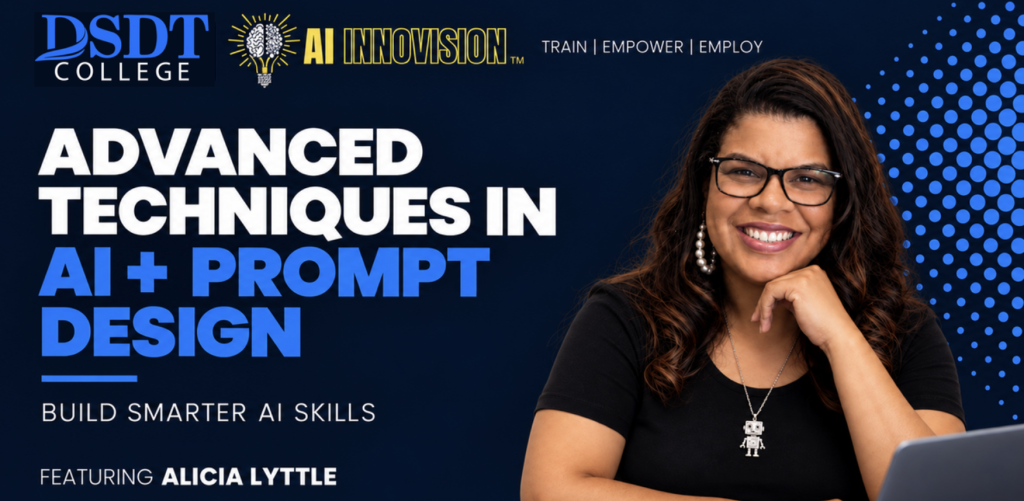
Artificial intelligence is quickly changing how people work, communicate, create content, and solve problems. However, getting meaningful results from AI requires more than simply entering a question. It requires knowing how to communicate with AI effectively and design prompts that produce useful, accurate, and actionable responses. DSDT College, in partnership with AI Innovision, is now enrolling students for Advanced Techniques in AI and Prompt Design, a four-week, hands-on training experience designed to help participants strengthen their practical AI skills. Go Beyond Basic AI Prompts The quality of an AI-generated response often depends on the quality of the instructions it receives. Effective prompt design can help users save time, improve productivity, generate stronger ideas, and approach workplace challenges more efficiently. Throughout the course, students will explore advanced techniques for communicating with AI tools and developing prompts for real-world applications. Instead of focusing only on theory, the training provides opportunities to practice creating, refining, and improving prompts. Participants will learn how to give AI clearer instructions, add the right context, organize complex requests, and adjust prompts based on the results they receive. These techniques can be useful across many professional areas, including marketing, business, technology, education, content creation, and entrepreneurship. Hands-On Training for Today’s Workforce Advanced Techniques in AI and Prompt Design is delivered through four weeks of hands-on training. The course is designed for individuals who want to become more confident and intentional when using artificial intelligence. Whether you are beginning to explore AI or already use it in your daily work, this training can help you develop a more structured approach. Students will gain practical experience they can apply in professional projects, workplace tasks, and future career opportunities. The course may be especially valuable for: Professionals looking to improve workplace productivity Entrepreneurs and small-business owners Marketing and content-creation professionals Educators and trainers Technology professionals Career changers interested in AI Anyone who wants to use AI more effectively Featuring Guest Lecturer Alicia Lyttle The course will feature guest lecturer Alicia Lyttle, an experienced AI strategist, entrepreneur, and industry leader. Her insight will help students better understand how artificial intelligence and prompt design can be applied to real business challenges and professional opportunities. Through this partnership with AI Innovision, DSDT College continues its commitment to providing career-focused training that reflects the changing needs of today’s workforce. Open to Military and Civilian Students Advanced Techniques in AI and Prompt Design is military approved, and civilian students are also encouraged to apply. Veterans receive priority enrollment, and discounts may be available for students using cash-payment options. These enrollment opportunities are part of DSDT College’s continued mission to make relevant, practical training accessible to individuals from different professional and educational backgrounds. Start Building Smarter AI Skills Artificial intelligence will continue to influence industries and reshape the skills employers value. Learning how to design stronger prompts can help you use these tools with greater purpose, creativity, and confidence. Enrollment is now open for the next cohort of Advanced Techniques in AI and Prompt Design. Take the next step toward building practical AI skills and learning how to think beyond the prompt. To learn more or begin the enrollment process, visit www.dsdt.edu. DSDT College: Train | Empower | Employ
Work Smarter with AI: Explore Research and Workflow Automation with Perplexity
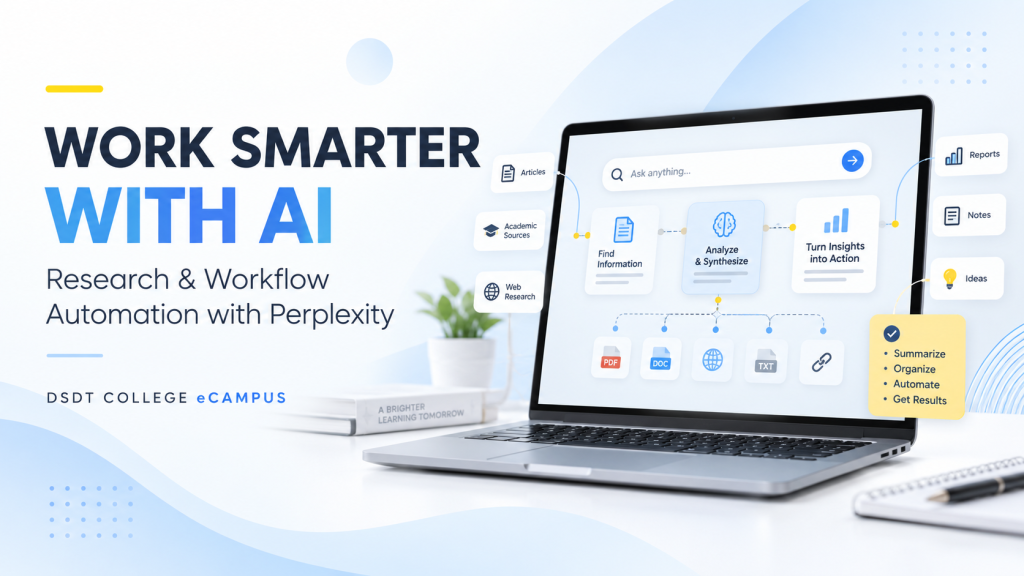
Artificial intelligence is changing how professionals research information, create content, and manage everyday projects. With the right tools and training, tasks that once took hours can now be completed more efficiently. The AI Research & Workflow Automation with Perplexity Online Certificate Course from DSDT College eCampus provides practical training for anyone interested in using AI to improve productivity, organize information, and streamline their work. Go Beyond Basic AI Searches Perplexity is an AI-powered research platform designed to deliver detailed answers supported by online sources. Instead of simply generating text, it can help users explore topics, organize research, summarize information, and develop content more effectively. Throughout this 20-part video course, learners will discover how to use Perplexity and complementary AI tools as research assistants, content collaborators, and workflow partners. What Will You Learn? The course covers practical skills that can be applied across business, education, marketing, technology, and creative work, including: Using AI models for writing, summarizing, and organizing content Creating and managing Pages and Spaces in Perplexity Comparing different AI models and their capabilities Generating images with AI-powered tools Drafting, refining, and publishing written content Organizing research and building knowledge resources Working with HTML and AI-supported digital workflows Automating tasks to reduce repetitive work Each section includes focused video lessons, quizzes, and assignments that allow learners to apply what they have learned. Who Is This Course For? This online certificate course is ideal for: Business owners and entrepreneurs Digital marketers and content creators Students and educators Researchers and writers Freelancers and remote professionals Technology and IT professionals Consultants and corporate teams Anyone interested in improving productivity with AI Whether you want to accelerate research, overcome creative roadblocks, or develop a more efficient workflow, this course provides tools you can begin using in your daily work. Flexible Online Learning Through DSDT College eCampus DSDT College eCampus makes professional development more accessible through flexible, online learning. This intermediate-level course includes lifetime enrollment access and a certificate of completion, allowing learners to study at their own pace and revisit the material when needed. Start Building Smarter Workflows Today AI is becoming an essential part of modern work. Learning how to research, create, and organize information effectively with AI can help you save time and approach projects with greater confidence. Explore the AI Research & Workflow Automation with Perplexity Online Certificate Course and start building a smarter way to work. https://learn.dsdt.edu/courses/new-course-26/
Work Smarter and Collaborate Better with Google Workspace
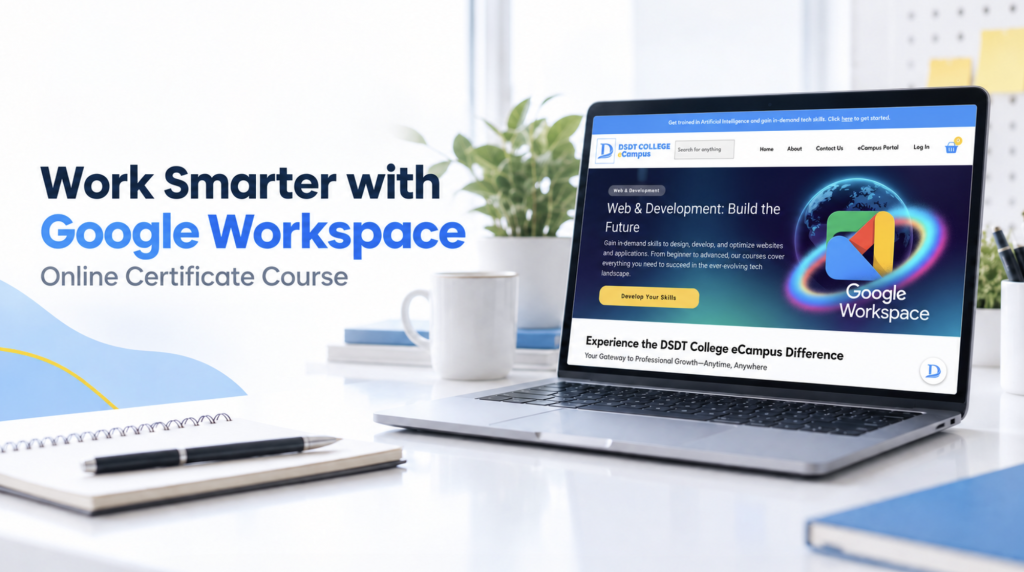
Today’s workplace depends on fast communication, organized information, and effective teamwork. Whether you work in an office, remotely, or manage your own business, knowing how to use digital collaboration tools can make your daily responsibilities easier. The Google Workspace Online Certificate Course from DSDT College eCampus helps learners build practical skills using some of today’s most widely used workplace applications. What Is Google Workspace? Google Workspace is a collection of cloud-based tools designed to help individuals and teams communicate, create, organize, and collaborate. It includes familiar applications such as Gmail, Google Drive, Docs, Sheets, Slides, Calendar, Chat, and Google Meet. Because these tools work together, users can manage projects, share information, schedule meetings, and collaborate on documents from almost anywhere. What Will You Learn? This online course explores how to use Google Workspace more effectively in professional, educational, and business environments. Learners will develop skills in: Collaborating in real time with Google Docs, Sheets, and Slides Organizing files and folders through Google Drive Managing file-sharing permissions and shared access Communicating professionally with Gmail, Google Chat, and Google Meet Scheduling meetings and managing time with Google Calendar Using integrations and extensions to improve productivity Applying security and privacy practices to protect information Managing administrative tools and user permissions The course also includes quizzes and assignments that allow learners to apply what they have learned. Who Should Take This Course? The Google Workspace Online Certificate Course can benefit a wide range of learners, including: Office and administrative employees Remote and hybrid workers Managers and team leaders Students and educators Small-business owners Human resources professionals Customer-support teams Nonprofit and community organizations Anyone interested in strengthening their digital workplace skills Whether you are new to Google Workspace or want to use its features more efficiently, this course can help you become more confident and organized. Learn on Your Schedule The course is available completely online through DSDT College eCampus. Learners receive lifetime access, allowing them to complete the training at a pace that works with their personal and professional schedules. After completing the course requirements, learners will also receive a certificate of completion that can be added to a résumé or LinkedIn profile. Start Building More Efficient Workflows Strong digital collaboration skills can help you communicate more clearly, stay organized, and contribute more effectively in the workplace. With practical training in the tools used by modern teams, the Google Workspace Online Certificate Course can help you work smarter from virtually anywhere. Start learning today:https://learn.dsdt.edu/courses/google-workspace-online-certificate-course/
Work Smarter with the Marketing Automation Online Certificate Course
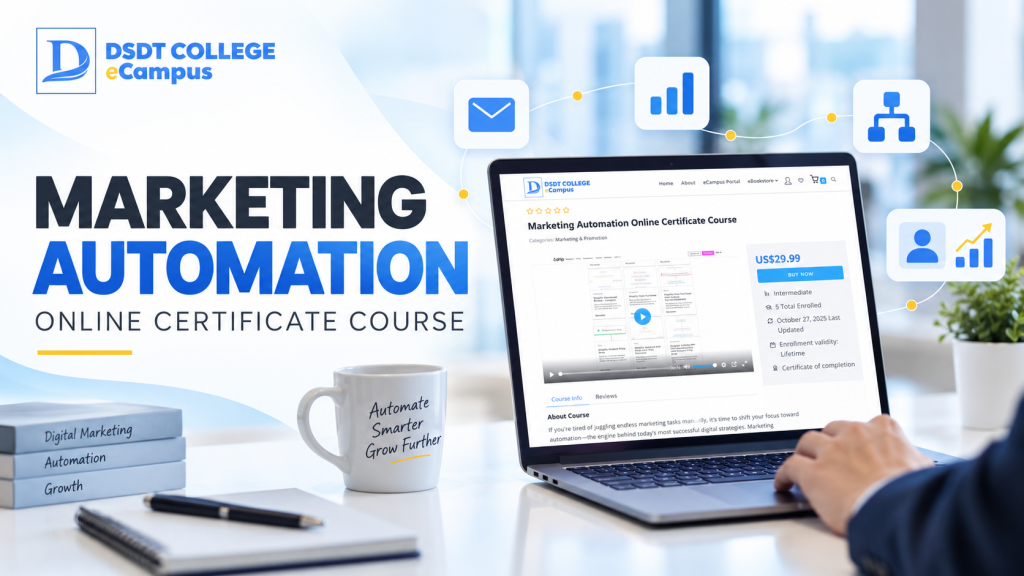
Marketing can involve countless repetitive tasks—from sending follow-up emails and nurturing leads to managing campaigns and tracking customer engagement. Completing these tasks manually can take valuable time away from strategy, creativity, and business growth. Marketing automation helps simplify that workload by creating systems that continue working even when you are focused elsewhere. The Marketing Automation Online Certificate Course from DSDT College eCampus provides practical, hands-on training for individuals who want to attract, engage, and convert customers more efficiently. Whether you are a marketing professional, entrepreneur, e-commerce store owner, social media manager, or sales specialist, this course can help you develop automation skills that support real-world business goals. What Is Marketing Automation? Marketing automation uses technology to complete repetitive marketing activities based on schedules, customer actions, or custom workflows. Instead of manually sending every message or tracking every interaction, businesses can create automated systems that respond at the right time. For example, an online store can automatically remind a customer about an abandoned shopping cart, send helpful information after a purchase, or notify shoppers when the price of a product drops. A sales team can also use automation to follow up with leads, organize customer interactions, and move prospects through the sales process. When used effectively, marketing automation can improve productivity, create more consistent customer experiences, and help organizations scale their marketing efforts. What You Will Learn This online video course introduces the fundamentals of marketing automation and explains how automation can contribute to business growth. Students will learn how to: Understand the purpose and benefits of marketing automation Build a custom automation workflow from scratch Automate repetitive marketing tasks to improve productivity Create and manage workflows and campaigns Optimize automated processes to increase engagement and sales The course begins with an introduction to automation before moving into workflows and the step-by-step process of building your first workflow. Quizzes and assignments reinforce the material and give students opportunities to apply what they learn. Who Should Enroll? The Marketing Automation Online Certificate Course is designed for professionals and business owners who want to make their marketing more efficient, including: Digital marketers and marketing professionals who want to streamline campaigns, automate customer communication, and improve conversion rates Entrepreneurs and business owners who want to scale their marketing and strengthen customer engagement E-commerce store owners interested in automating email campaigns, abandoned-cart reminders, and personalized customer journeys Social media managers who need better systems for scheduling content, managing responses, and monitoring engagement Sales and lead-generation professionals who want to automate follow-ups, nurture leads, and track customer interactions Because the course is online and enrollment remains valid for a lifetime, students can learn on their own schedule and revisit the material whenever they need a refresher. Build Skills You Can Use Right Away Marketing automation is not only about saving time. It can also help businesses communicate more consistently, respond to customers more quickly, and create personalized experiences at scale. Learning how to design and improve automated workflows gives professionals a practical skill they can apply across marketing, sales, e-commerce, and business operations. The course is offered at an intermediate level and includes a certificate of completion. It is a valuable option for anyone ready to replace repetitive manual processes with smarter, more efficient systems. Start Learning Today Take the next step toward building marketing systems that work around the clock. Enroll in the Marketing Automation Online Certificate Course through DSDT College eCampus today. Learn more and enroll here: https://learn.dsdt.edu/courses/marketing-automation-video-course/
Create Smarter with AI: Explore DSDT College’s Smart Digital Creation Course
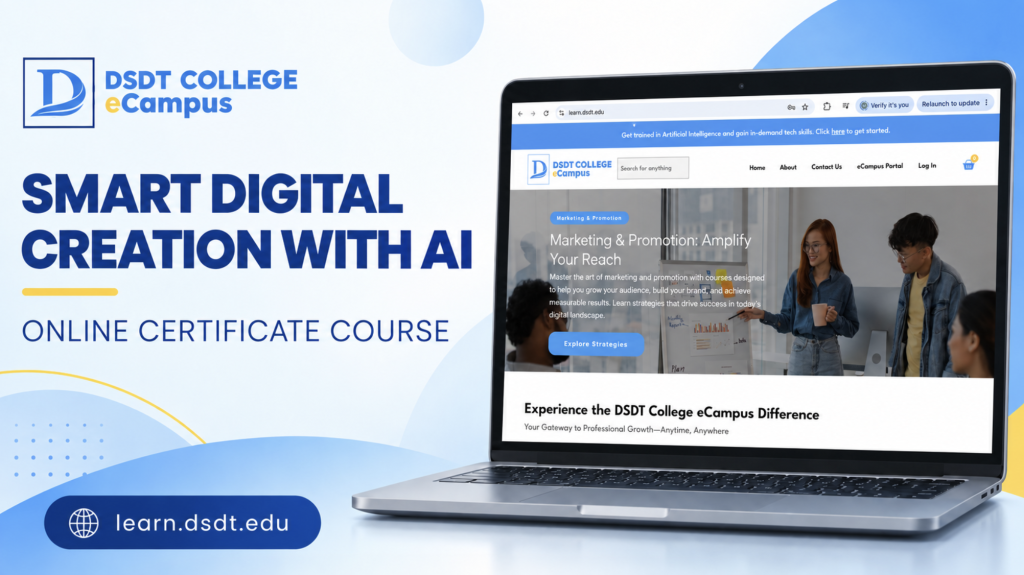
Artificial intelligence is changing the way digital content is researched, developed, and shared. Whether you are creating marketing materials, educational resources, social media content, presentations, or other digital products, the right AI tools can help you work more efficiently. DSDT College’s Smart Digital Creation with AI Online Certificate Course is a hands-on, 20-part video course designed for professionals, entrepreneurs, educators, and content creators who want to use AI throughout the digital creation process. Turn Your Ideas into Polished Digital Products This course goes beyond basic AI theory by focusing on practical, real-world applications. Students will learn how to simplify complex tasks, organize research, improve productivity, and create polished digital assets in multiple formats. The course introduces tools and strategies that can support every stage of a project—from gathering reliable information and developing ideas to organizing content and preparing the finished product. What Will You Learn? Throughout the course, students will learn: How to use AI tools to simplify content creation and management Techniques for organizing research with Zotero and NotebookLM Strategies for creating and sharing polished digital products in multiple formats Best practices for incorporating tools such as Perplexity Spaces into an efficient workflow Advanced methods for gathering and using trade and scientific information Ways to improve creativity, organization, and productivity with AI Who Is This Course For? The Smart Digital Creation with AI course is ideal for: Content creators: Streamline the production of blogs, videos, and social media content. Graphic designers: Incorporate AI into the creative process and complete projects more efficiently. Small-business owners: Create marketing materials, social media posts, and other digital assets. Educators and trainers: Develop presentations, lesson plans, and engaging educational resources. Writers and authors: Use AI to brainstorm, draft, organize, and edit articles, books, and scripts. Marketing professionals: Produce and manage creative content for campaigns across multiple platforms. Entrepreneurs and professionals: Turn ideas and research into organized, polished digital products. Build Smarter with AI Knowing how to use AI effectively can help you save time, manage information, and create stronger digital content. With practical video lessons and tools that can be applied to real projects, this online certificate course can help you build valuable skills for today’s digital world. Ready to transform the way you create? Enroll in the Smart Digital Creation with AI Online Certificate Course today: https://learn.dsdt.edu/courses/smart-digital-creation-with-ai-video-course/
Master Microsoft AI Copilot and Work Smarter
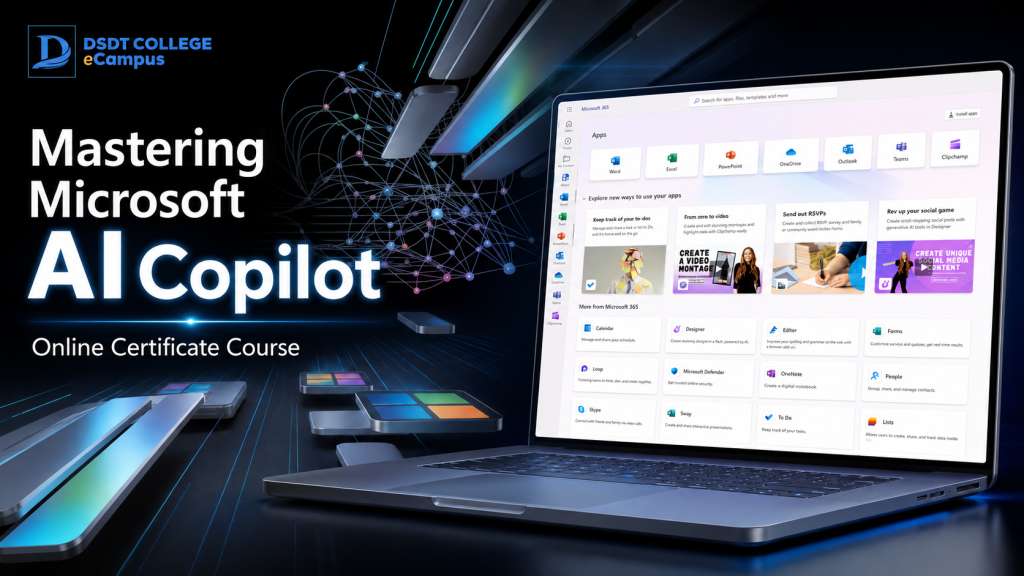
Artificial intelligence is transforming how professionals communicate, create content, analyze information, and manage everyday tasks. With the Mastering Microsoft AI Copilot Online Certificate Course, you can learn how to use Microsoft’s AI-powered tools to improve productivity and accomplish more in less time. This practical, 20-part video course explores how Microsoft AI Copilot can support your work across familiar Microsoft 365 applications, including Word, Excel, PowerPoint, Outlook, and Teams. Discover a Smarter Way to Work Throughout the course, you’ll explore real-world examples showing you how to use Microsoft AI Copilot to: Draft and edit professional emails and documents Summarize meetings and important information Analyze data and create engaging visuals Build polished presentations Generate reports and proposals Automate repetitive tasks Organize projects and daily responsibilities Improve AI-generated results with effective prompts Each lesson focuses on practical skills you can apply to your career, business, or creative projects. Create Professional Content with AI The course also introduces Microsoft tools that can help you create professional content more efficiently. You’ll learn techniques for producing promotional materials with Microsoft Designer and creating videos, captions, voiceovers, and transcriptions using Microsoft Clipchamp. You’ll also discover how AI Speaker Coach can help strengthen your presentation and communication skills. Who Should Take This Course? This course is an excellent fit for: Business professionals looking to streamline their daily workflows Marketing teams creating promotional content Content creators producing videos, captions, and voiceovers Educators improving presentations and communication Entrepreneurs developing branding and marketing materials Administrative professionals automating repetitive tasks Students and researchers organizing large amounts of information Small business owners managing multiple responsibilities Freelancers enhancing their creative output with AI Turn Microsoft Copilot into Your Productivity Partner By the end of the course, you’ll better understand how to customize Copilot’s suggestions, write effective prompts, and incorporate AI into your daily workflow. Whether you’re preparing a presentation, writing an important email, analyzing information, or creating promotional content, this training can help you produce professional-quality work faster and with greater confidence. Course Details Level: Intermediate Format: 20-part online video course Access: Lifetime enrollment validity Certificate: Certificate of completion Price: $199.99 Ready to transform the way you work? Enroll in the Mastering Microsoft AI Copilot Online Certificate Course today!
Turn Your Podcasting Ideas into Reality with The Podcast Masterclass – Spotify Edition
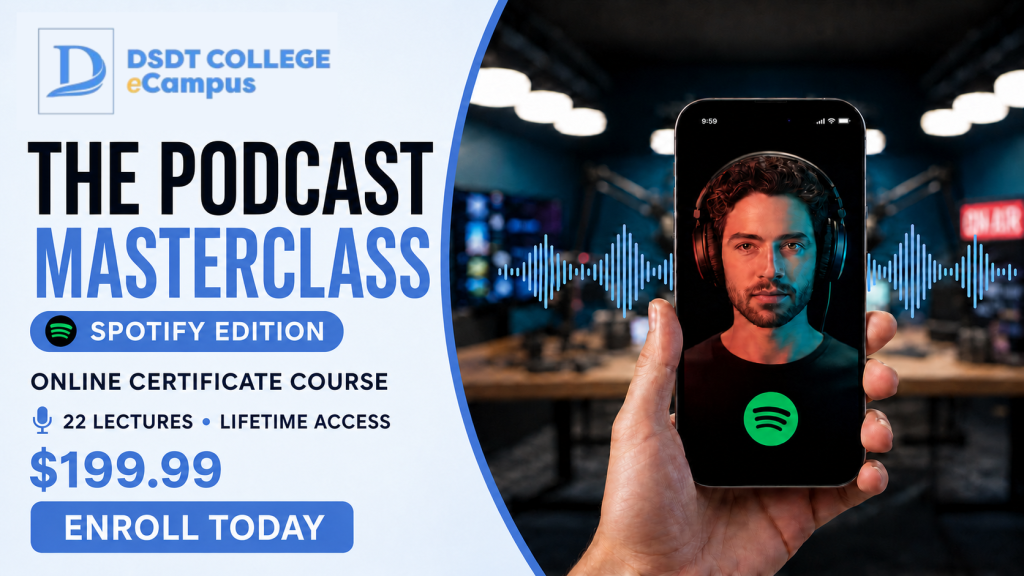
Podcasting has become one of the most powerful ways to share ideas, tell stories, build a brand, and connect with audiences around the world. However, producing a successful podcast takes more than recording an episode and uploading it online. The Podcast Masterclass – Spotify Edition is an online certificate course from DSDT College eCampus designed to help aspiring and active podcasters create, manage, promote, and grow their shows on Spotify. Featuring 22 online lectures, lifetime enrollment access, and a certificate of completion, this course provides step-by-step guidance covering the technical, creative, and promotional sides of podcasting. Enroll here: https://learn.dsdt.edu/courses/the-podcast-masterclass-spotify-edition-video-course/ Learn How to Build and Optimize Your Podcast A successful podcast begins with the right setup. Students will learn the technical process of creating and optimizing a podcast for Spotify, including managing show settings, descriptions, content, and updates. The course also explains how to transition from other platforms and improve important elements of a podcast so new listeners can more easily discover and engage with the show. Use AI to Improve Your Podcasting Workflow Artificial intelligence is changing the way creators plan, produce, and promote content. This masterclass introduces practical ways to incorporate AI tools into the podcasting process. Students will learn how AI can help improve podcast descriptions, organize content ideas, streamline editing, and support promotional efforts. These tools can help creators spend less time on repetitive tasks and more time developing meaningful stories and connecting with their audiences. Understand Your Audience with Spotify Analytics Growing a podcast requires more than publishing new episodes. Creators must also understand what their listeners enjoy and how they interact with their content. The Podcast Masterclass – Spotify Edition teaches students how to use Spotify’s analytics tools to track performance, monitor growth, and understand listener behavior. These insights can help podcasters make more informed decisions when planning future episodes and promotional strategies. Increase Listener Engagement Building a loyal audience involves creating opportunities for listeners to connect with the show. Students will explore strategies for increasing interaction through Spotify’s features and creating content that encourages listeners to return for future episodes. Whether the goal is to grow a personal project, promote a business, or build an online community, audience engagement plays an important role in developing a successful podcast. Explore Podcast Monetization Podcasting can be both a creative outlet and a valuable business opportunity. This course introduces monetization strategies and provides guidance on preparing a podcast for potential sponsorships. Students will learn how professional branding, consistent content, audience engagement, and performance data can help make a podcast more attractive to potential advertisers and sponsors. What Will You Learn? Through this course, students will learn: How to set up and optimize a podcast on Spotify Best practices for managing podcast content, production, and updates How to improve podcast descriptions using AI tools Strategies for increasing audience engagement How to track podcast growth with Spotify analytics Ways to streamline content planning, editing, and promotion Strategies for monetization and sponsorship readiness Who Should Take This Course? The Podcast Masterclass – Spotify Edition is ideal for: Aspiring and active podcasters Content creators and YouTubers Entrepreneurs and business owners Coaches and consultants Freelancers and side hustlers Digital marketers and social media managers Educators and online course creators Authors and public speakers Nonprofit and community leaders Musicians, artists, and performers Start Building Your Podcast Today Whether you want to launch a passion project, promote your business, educate an audience, or explore new income opportunities, podcasting gives you a powerful platform for sharing your voice. The Podcast Masterclass – Spotify Edition provides practical training to help you create, optimize, grow, and monetize your podcast. With 22 online lectures, lifetime access, and a certificate of completion, you can develop valuable podcasting skills at your own pace. Ready to bring your podcasting ideas to life? Enroll today for $199.99: https://learn.dsdt.edu/courses/the-podcast-masterclass-spotify-edition-video-course/
Master ChatGPT and Transform the Way You Work
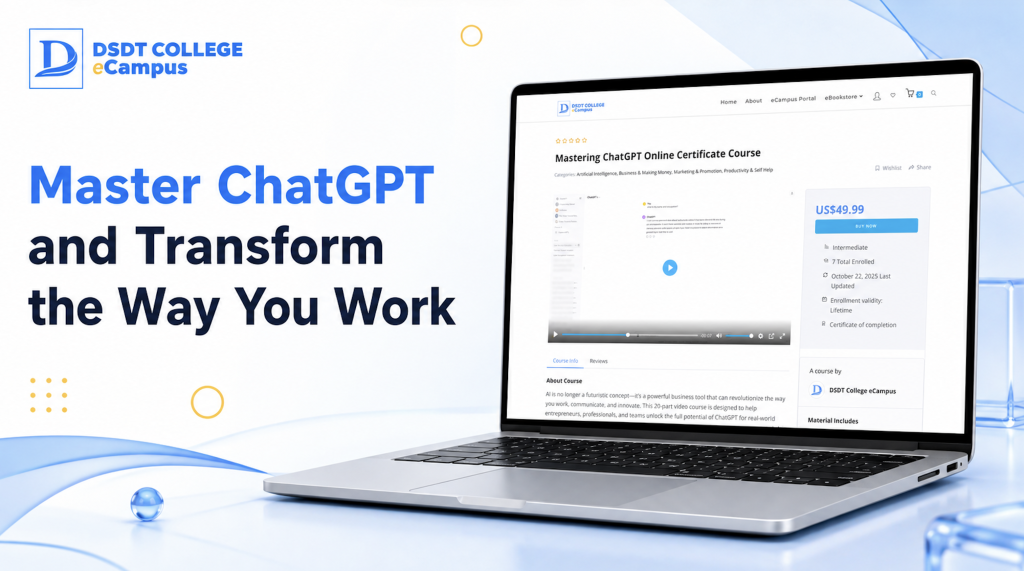
Artificial intelligence is no longer a futuristic concept—it is a powerful business tool changing how people work, communicate, create, and innovate. With the Mastering ChatGPT Online Certificate Course from DSDT College eCampus, you can learn practical ways to use ChatGPT in your everyday work and business operations. This affordable online course includes 19 easy-to-follow video lectures designed for entrepreneurs, professionals, content creators, marketers, students, and teams. Whether you are completely new to artificial intelligence or have already started experimenting with ChatGPT, this course can help you develop valuable skills for today’s workplace. What Will You Learn? The course walks you through ChatGPT’s essential tools and features, including account setup, interface navigation, available plans, prompt engineering, conversation memory, file and image analysis, and custom GPTs. You will also learn how to use ChatGPT to: Save time by streamlining repetitive tasks Create and improve written content Strengthen business communication Brainstorm ideas and solve problems Support marketing and customer service Improve productivity and organization Collaborate more effectively with your team Develop stronger and more effective prompts Support business planning and decision-making Through practical demonstrations and real-world examples, you will discover how ChatGPT can become a valuable part of your daily workflow. Who Is This Course For? The Mastering ChatGPT course can benefit people working in many different industries and roles, including: Entrepreneurs and business owners Digital marketers and social media managers Content creators, bloggers, and copywriters Educators and students Freelancers and working professionals Human resources professionals and recruiters Customer service teams E-commerce store owners Software developers and engineers Anyone interested in developing practical AI skills No matter your professional background, understanding how to use ChatGPT effectively can help you work more efficiently and confidently adapt to an AI-powered workplace. Affordable and Flexible Online Learning The Mastering ChatGPT Online Certificate Course is available for only $49.99. Enrollment includes lifetime access to the video course, allowing you to learn on your schedule and return to the lectures whenever you need a refresher. After completing the course, you will also receive a certificate of completion demonstrating your commitment to building valuable artificial intelligence skills. Start Mastering ChatGPT Today AI is transforming the workplace, and now is the perfect time to begin developing the skills needed to keep up. Learn how to increase your productivity, improve your communication, and use ChatGPT as a practical tool for work and business. Enroll in the Mastering ChatGPT Online Certificate Course today for only $49.99: https://learn.dsdt.edu/courses/new-course-7/
Build Skills That Move You Forward with DSDT College eCampus
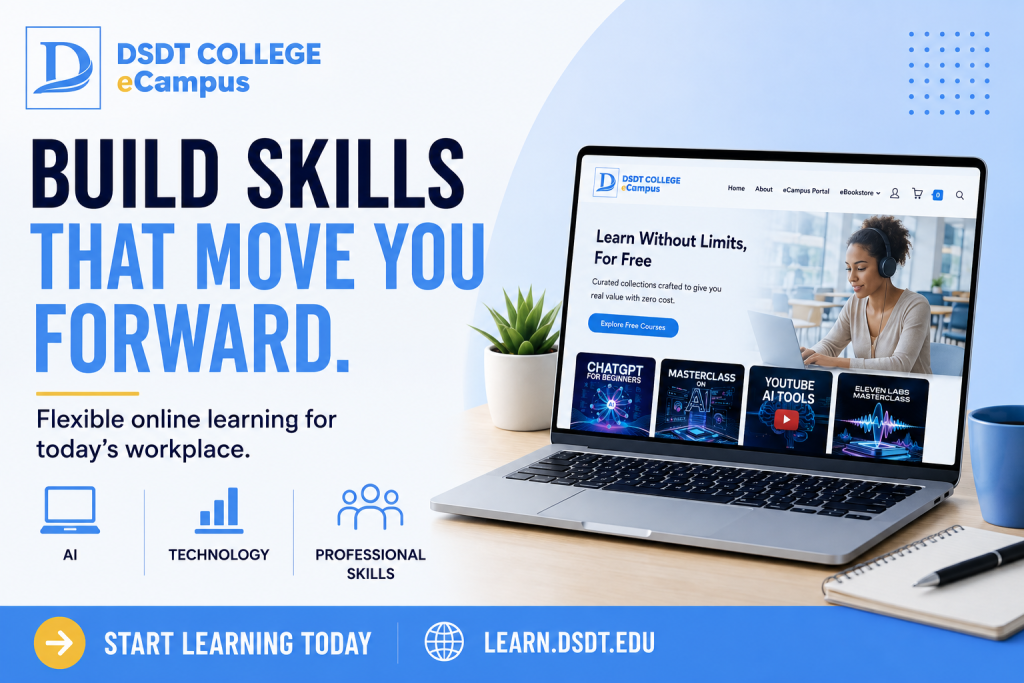
The workplace is constantly changing, and learning new skills can help you stay prepared for what comes next. DSDT College eCampus makes it easier to continue learning with flexible online courses designed to fit into your schedule. Whether you want to explore artificial intelligence, technology, professional development, or other career-focused topics, eCampus gives you the freedom to learn from virtually anywhere. Flexible Learning for Today’s Workplace Between work, family, and everyday responsibilities, finding time to learn can be challenging. DSDT College eCampus gives you access to online learning opportunities that allow you to build your skills at your own pace. With eCampus, you can: Explore courses in AI, technology, and professional skills Learn online from your computer or mobile device Access courses and learning resources when it works for you Build practical knowledge for today’s evolving workplace Explore free courses to start learning at no cost Explore AI and Technology Technology continues to transform the way we work. DSDT College eCampus offers opportunities to learn more about emerging tools and topics, including AI and other technology-focused skills. Whether you are learning something completely new or expanding your current knowledge, eCampus provides an accessible way to continue developing professionally. Start Learning Today You don’t have to wait to start building new skills. Explore DSDT College eCampus and discover flexible learning opportunities designed to help you keep moving forward. BUILD SKILLS THAT MOVE YOU FORWARD. Start learning today at learn.dsdt.edu.