
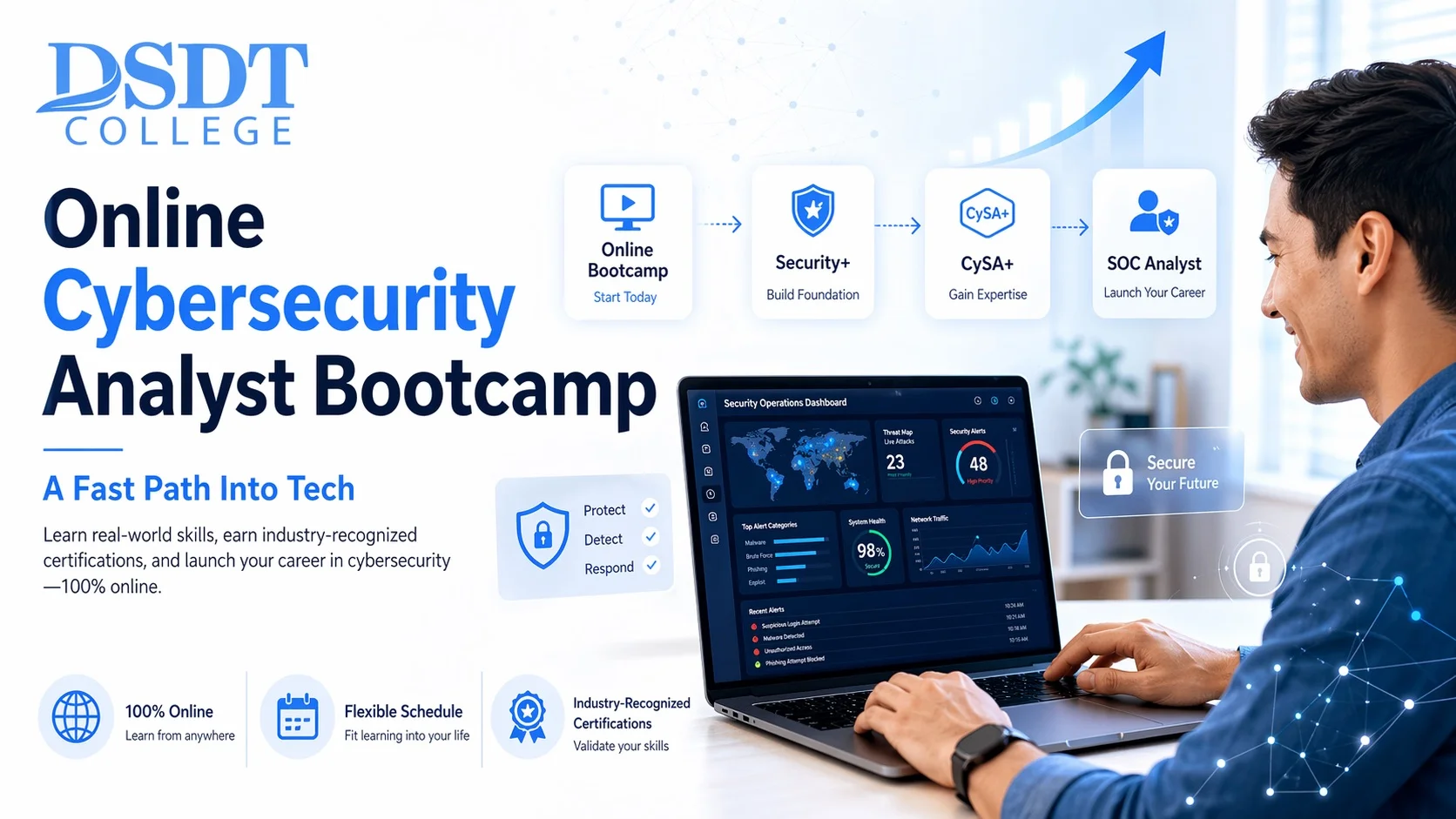
Why an Online Cybersecurity Analyst Bootcamp Could Be Your Fastest Path Into Tech
An online cybersecurity analyst bootcamp is one of the fastest ways to break into a field that has over 600,000 unfilled jobs in the U.S. alone — and that number keeps growing. As digital transformation accelerates, every sector from finance in New York to tech startups in Austin requires a dedicated shield against digital threats.
Here’s a quick snapshot of what you need to know:
| Factor | Details |
|---|---|
| Typical duration | 3-6 months (part-time or full-time) |
| Average cost | $3,000 – $13,000 |
| Entry-level salary | ~$80,000/year |
| Median salary (experienced) | $120,360/year |
| Prior experience required | None — most are beginner-friendly |
| Key certification | CompTIA Security+ (often included) |
| Job growth rate | 32% through 2033 (BLS) |
The cybersecurity market is projected to reach $212 billion in 2025, growing at roughly 15% per year. Companies, government agencies, and defense organizations are all competing for the same shrinking pool of qualified analysts. This massive talent gap has created a unique environment where employers are prioritizing skills and certifications over traditional four-year degrees.
A bootcamp won’t take four years. It won’t cost $80,000 in tuition. And for veterans and military families especially, the right program can be covered through benefits you’ve already earned. These programs are designed to be high-impact, focusing strictly on the tools and techniques used in modern Security Operations Centers (SOCs).
That’s exactly why this comparison guide exists — to cut through the noise and show you which programs actually deliver.
I’m writing on behalf of DSDT College — a nationally accredited, Military-Friendly institution specializing in CompTIA-based cybersecurity training, including Security+, CySA+, and PenTest+. Having worked at the intersection of military education and cybersecurity career pathways, including programs supporting transitioning soldiers at Fort Hood, I know what separates a credible online cybersecurity analyst bootcamp from one that just takes your money. Let’s walk through what actually matters when choosing a program.
What to Expect from an Online Cybersecurity Analyst Bootcamp
When we talk about an online cybersecurity analyst bootcamp, we aren’t talking about a casual series of YouTube videos. These are intensive, career-focused programs designed to bridge the gap between theoretical knowledge and the practical application required in high-stakes environments.
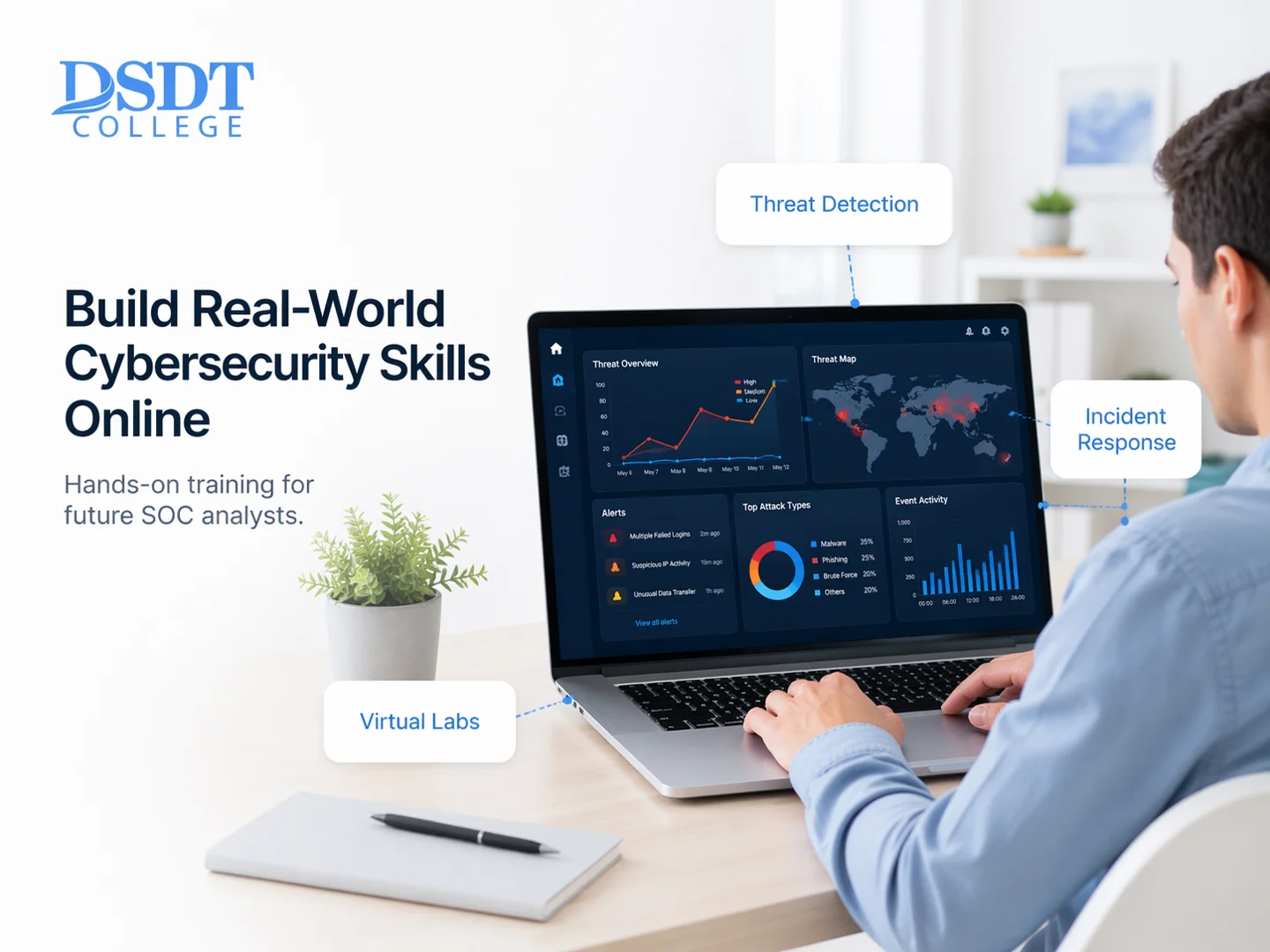
Most students entering these programs are aiming for a role as a Security Operations Center (SOC) Analyst. In this role, you are the first line of defense, monitoring networks for suspicious activity and responding to potential threats in real-time. To get you there, bootcamps focus heavily on hands-on simulations. You won’t just read about firewalls; you’ll configure them in virtual sandboxes, learning how to block malicious traffic while ensuring legitimate data flows uninterrupted.
The median annual salary for information security analysts highlights the financial potential of the field. To reach that level, you can expect a curriculum that spans:
- Network Security: Understanding how data moves across the internet and how to lock down the “pipes” using encryption and secure protocols.
- Threat Detection: Learning to spot the “digital fingerprints” of a hacker by analyzing system logs and network traffic patterns.
- Incident Response: Knowing exactly what to do when a breach is detected, from containment to eradication and recovery.
If you choose a full-time path, expect a 40-hour weekly commitment, mirroring a standard work week. For those working or managing a family, part-time options usually require 15-25 hours per week, offering the flexibility to learn from anywhere, whether you are in Los Angeles, Chicago, or Miami.
While you don’t need a computer science degree, you do need basic computer literacy — things like efficiently using the internet, understanding cloud basics, and being comfortable with Windows or Linux operating systems. The goal is to build your technical stack from the ground up.
Essential Certifications and Skills for Career Changers
In cybersecurity, certifications are the “gold standard.” They prove to a hiring manager that you have met a specific industry benchmark and possess the verified skills to protect their infrastructure. Most top-tier bootcamps align their curriculum with CompTIA certifications because they are globally recognized and required by many government and defense organizations, including the Department of Defense (DoD).
A high-quality online cybersecurity analyst bootcamp will teach you more than just theory. You will master the tools of the trade, including:
- NIST Frameworks: The “rulebook” for how organizations manage cybersecurity risk, providing a structured approach to identifying and protecting assets.
- Python for Automation: Using basic coding to automate repetitive security tasks, such as scanning for vulnerabilities or parsing large log files.
- Generative AI in Cybersecurity: Using AI tools to triage threats, analyze large sets of security data, and even assist in writing secure code.
- SIEM Tools: Learning platforms like Splunk or Nessus to monitor enterprise-level infrastructure and correlate data from multiple sources to find hidden threats.
| Objective | CompTIA Security+ | CompTIA CySA+ |
|---|---|---|
| Primary Focus | General Security Fundamentals | Behavioral Analytics & Threat Hunting |
| Role Target | Entry-level Security Specialist | Cybersecurity Analyst / SOC Tier II |
| Key Skill | Implementation & Governance | Detection & Incident Response |
| Experience Level | 0-2 Years | 3-4 Years (Recommended) |
Preparing for the CompTIA CySA+ in an Online Cybersecurity Analyst Bootcamp
While Security+ gets you in the door, the CompTIA Cybersecurity Analyst (CySA+) certification is what truly defines the “Analyst” role. This exam (CS0-003) focuses on the analytical skills needed to monitor and secure organizations. It moves beyond simple identification and into the realm of behavioral analytics.
We emphasize CySA+ training because it moves beyond “what is a threat” to “how do we analyze and neutralize it.” This involves advanced security operations, vulnerability response, and critical reporting. For those looking for a broader foundation, exploring more info about IT associate degrees can provide the academic backing to complement these certifications, offering a more comprehensive educational background that many employers value for long-term career growth.
Career Support, Salaries, and Military Benefits
The end goal of any bootcamp is long-term career stability. However, the technical skills are only half the battle in a competitive job market. You need to know how to market those skills to recruiters who may only spend six seconds looking at your resume.
The best bootcamps provide robust career support, including:
- 1-on-1 Mentorship: Real professionals guiding you through the “unwritten rules” of the industry and helping you navigate complex technical challenges.
- Resume Optimization: Tailoring your past experience (even if it wasn’t in tech) to highlight transferable skills like problem-solving, attention to detail, and crisis management.
- Job Search Toolkits: Access to exclusive hiring networks, LinkedIn profile optimization, and mock interview sessions to build your confidence.
For our military community, we take pride in helping Veterans utilize the Post-9/11 GI Bill® and helping military spouses access MyCAA funding, which can provide up to $4,000 for tuition. According to the World Economic Forum on National Security, putting cybersecurity at the core of national security is a global priority, making veterans a natural fit for these roles due to their experience with disciplined operations and security protocols.
At DSDT College, we offer these programs nationwide online, serving students from Houston to Seattle. However, for active-duty soldiers transitioning out of the military, we also offer a specialized Cybersecurity CSP/SkillBridge program. Please note: This specific CSP program is strictly an in-person experience at Fort Hood, designed to give transitioning service members hands-on training before they hang up the uniform. It is a separate track from our standard online offerings.
How to Choose the Right Online Cybersecurity Analyst Bootcamp
With so many options, how do you choose? Consider these factors:
- Tuition & Financing: Look for transparent pricing and flexible payment plans or loan options like Climb Credit that don’t require a massive upfront investment.
- Flexible Scheduling: Can you keep your current job while studying? Look for asynchronous options or evening cohorts.
- Curriculum Depth: Does it cover technology professional programs that include multiple certifications like Network+ and Security+, or just one?
- Portfolio Building: Will you leave with a “capstone project” or a documented lab history that you can actually show a recruiter to prove your hands-on capabilities?
Frequently Asked Questions about Cybersecurity Analyst Training
Is an online cybersecurity analyst bootcamp worth it compared to a degree?
Yes, especially for those seeking rapid entry into the workforce. While a four-year degree offers a broad theoretical foundation, a bootcamp is a “skills-first” program. It focuses exactly on what employers are hiring for right now — like vulnerability assessment and incident response.
Do I need prior IT experience to start a bootcamp?
No. While some graduates come from non-tech backgrounds like retail, teaching, or transportation, you only need basic computer literacy and a passion for problem-solving to succeed.
What hardware and software are required for online cybersecurity labs?
You will generally need a modern laptop (Mac or PC) with at least 8GB of RAM (16GB preferred) and a reliable high-speed internet connection. Most bootcamps provide access to virtual machines and cloud-based labs, so you won’t need to purchase expensive enterprise software yourself.
Conclusion
The digital world is under constant attack, and the “good guys” are losing because they don’t have enough people on the front lines. An online cybersecurity analyst bootcamp is your fast-track ticket into this high-growth, high-pay industry.
Whether you are a high school graduate, a veteran transitioning to civilian life, or an adult looking for a life-changing career shift, the path is open. At DSDT College, we provide the necessary support to ensure our students don’t just learn — they get hired.
Ready to defend the front lines of the internet? Explore DSDT Cybersecurity Programs and start your journey today.