Detroit Has Over 114,000 Tech Jobs Open — Here’s How to Get One
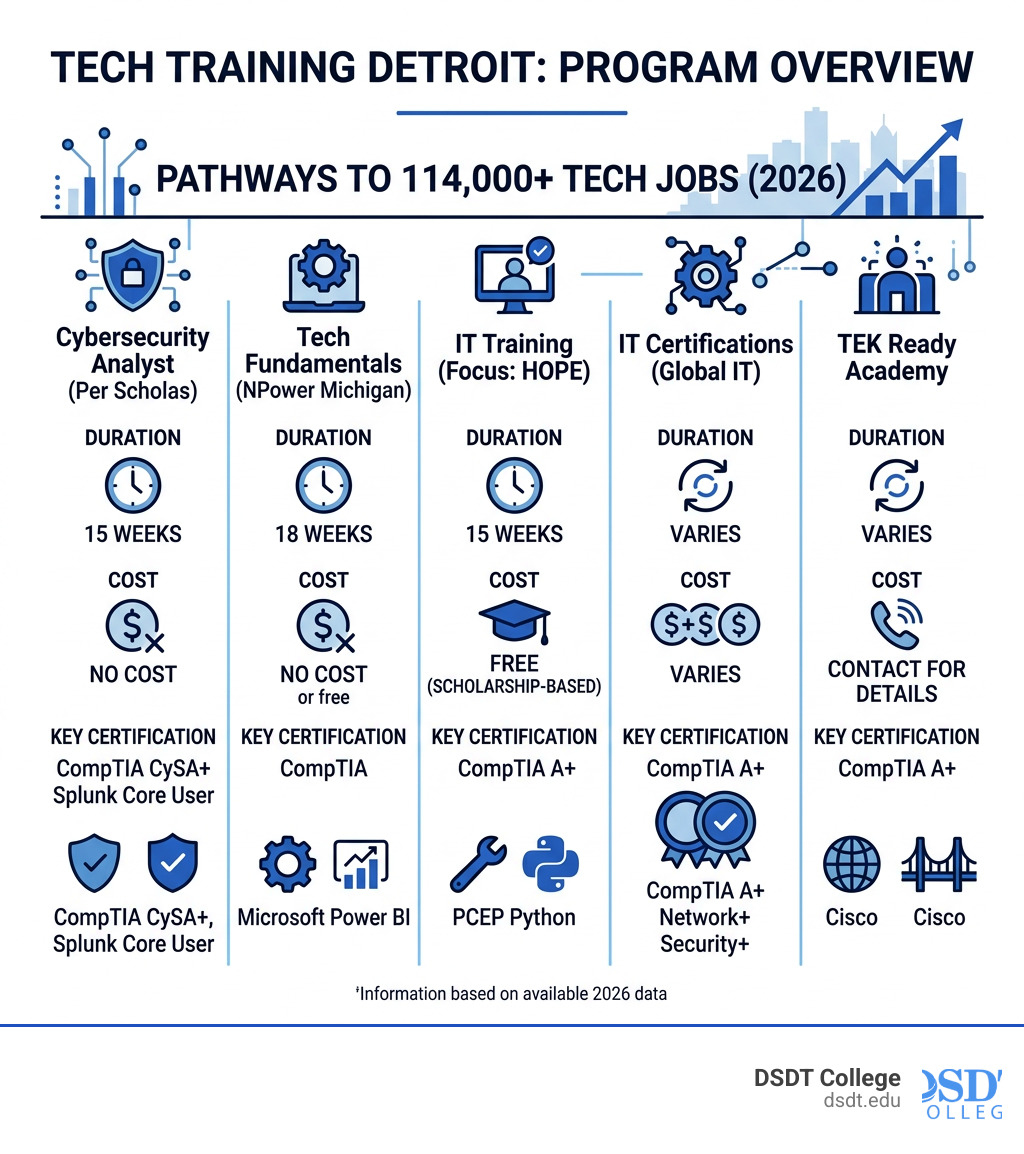
Tech Training Detroit programs give you a direct path into one of the fastest-growing job markets in the country. Here’s a quick look at the top training pathways available:
| Program Pathway | Duration | Cost | Key Certification |
|---|---|---|---|
| Cybersecurity Analyst | 15 weeks | No-cost options | CompTIA CySA+, Splunk Core User |
| IT Fundamentals | 18 weeks | No-cost options | CompTIA, Microsoft Power BI |
| MRI Technology | 2 years | Financial Aid/Scholarship | ARRT (MRI) |
| IT Certifications | Varies | Varies | CompTIA A+, Network+, Security+ |
| Software Development | Varies | Scholarship-based | PCEP Python, Cisco |
Detroit is the second-largest concentration of engineering talent in the U.S., with over 114,000 open tech jobs and a tech sector contributing $24.2 billion to the local economy. Yet thousands of residents — recent high school graduates, career changers, veterans, and young adults — haven’t yet found a clear on-ramp into these roles.
That’s exactly what the programs in this guide are designed to fix. Whether you want to break into cybersecurity, IT support, data analytics, or software development, Detroit has structured training paths — many of them free or scholarship-based — that can get you job-ready in as little as 15 weeks.
I’m Jamie Kothe, a workforce development specialist and veteran training program developer with experience connecting people to career-focused tech education, including Tech Training Detroit pathways. My background in grant writing, strategic partnerships, and sales management has given me a front-row seat to what actually works when people are trying to break into tech careers.
The Landscape of Tech Training Detroit
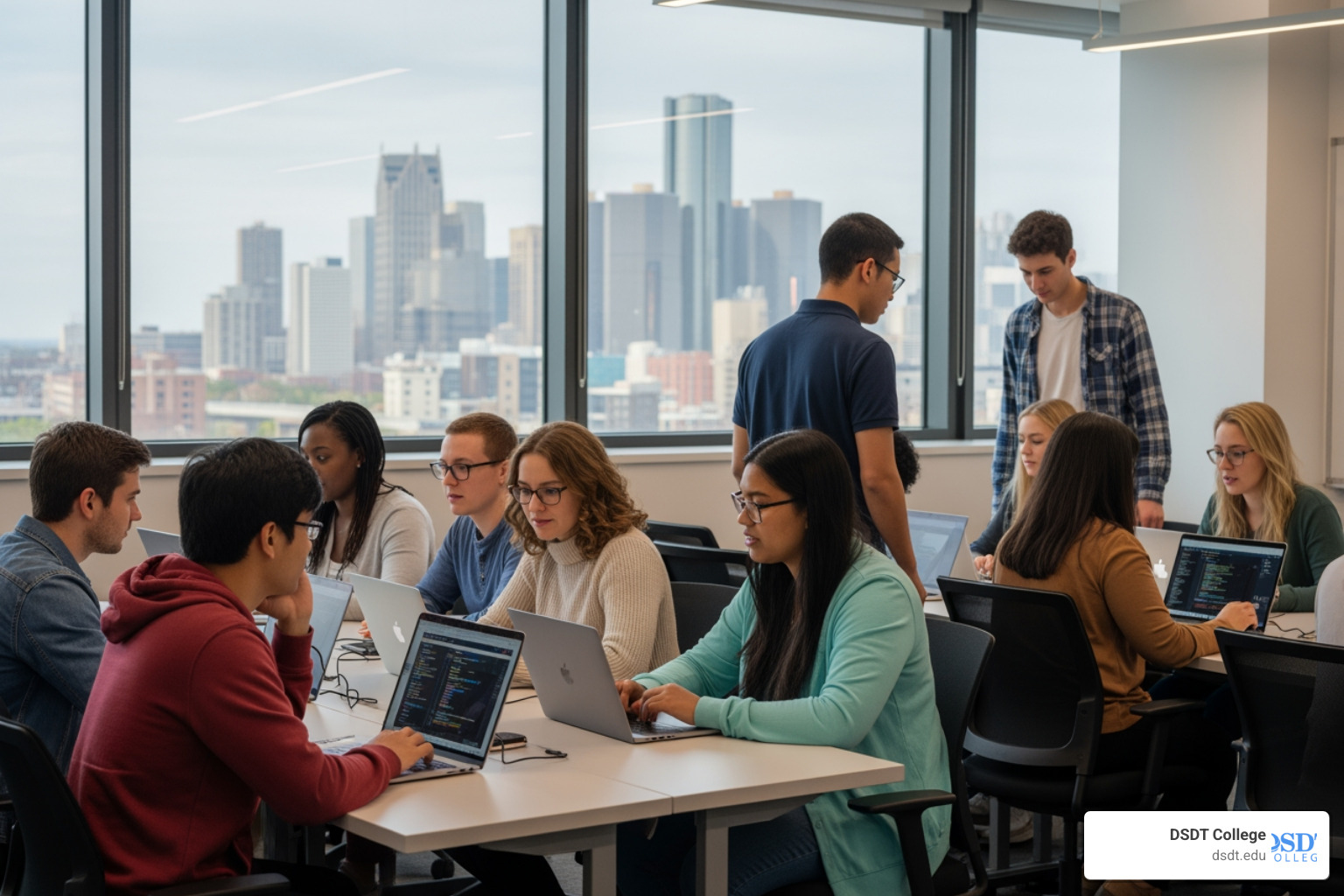
The tech scene in the Motor City is no longer just about assembly lines; it’s about the code that runs them. Today, Tech Training Detroit encompasses a massive variety of formats designed to fit into your busy life. We are seeing a shift toward immersive, short-term models that prioritize job readiness over four-year theories.
Whether you are looking for a 15-week deep dive into cybersecurity or an 18-week fundamental course, the options are flexible. Many programs now offer remote learning or hybrid formats, allowing you to study from home while still getting that crucial hands-on experience in a Security Operations Center (SOC).
One of the coolest things we’ve noticed is the integration of Generative AI into modern security workflows. You aren’t just learning how to fix a computer; you’re learning how to use AI to defend networks.

Entry-Level Tech Training Detroit Essentials
For those of us just starting out, the “Big Three” certifications remain the gold standard: CompTIA A+, Network+, and Security+. These are the building blocks of any IT career. You’ll learn the nitty-gritty of troubleshooting, mastering different operating systems, and securing mobile devices.
If you’re looking for local support to get started, you should definitely check out Detroit at Work. They offer a variety of pathways for Detroiters to gain these essential skills at no cost, often partnering with local organizations to ensure you have a seat in the classroom.
Advanced Cybersecurity and SOC Analyst Pathways in Tech Training Detroit
Once you have the basics down, it’s time to level up. Advanced training focuses on high-demand roles like Cybersecurity Analyst or SOC Analyst. These programs dive deep into:
- CompTIA CySA+ and Splunk Core User: Dual certifications that prove you can handle behavioral analytics and data monitoring.
- Threat Management: Learning how to hunt for vulnerabilities before the “bad guys” find them.
- Digital Forensics: The “CSI” of the tech world—analyzing what happened after a breach.
- PCAP Analysis and Secure Configuration: Understanding exactly how data moves across a network and how to lock down devices.
Specialized Career Paths: MRI Technology and Medical Imaging
While many people think “computers” when they hear “tech,” some of the most advanced technology in Detroit is found in our hospitals. At DSDT College, we specialize in training the next generation of healthcare tech professionals.
Our Associate of Applied Science in MRI Technology is a premier path for those who want to combine a love for technology with a passion for helping people. This program follows the ARRT Primary Pathway, which is the gold standard for becoming a registered MRI technologist.
In this program, we cover everything from human anatomy and physics to the complex mechanics of diagnostic imaging. It’s a fantastic career pathway for high school graduates or career changers who want a stable, high-paying job in the medical field. We offer online coursework paired with intensive clinical training, ensuring you get the hands-on experience needed to pass your ARRT certification exams.
Navigating Free and Low-Cost Program Options
We know that the cost of tuition can be a huge barrier. The good news? Detroit is one of the best places in the country for scholarship-based and no-cost training. Many programs are funded through WIOA (Workforce Innovation and Opportunity Act) and Michigan Works, specifically targeting underserved populations and young adults aged 18–26.
For our heroes in uniform, there are extensive resources available. You can learn about veterans’ education benefits and how to apply your GI Bill® to tech certifications. Many Detroit providers are “VET TEC” approved, meaning veterans can get their tuition covered and even receive a housing allowance while they train.
Eligibility and Application Requirements
While many of these programs are free, they aren’t “walk-ins.” You’ll need to be prepared for the admissions process. Most programs require:
- Education: A high school diploma or GED.
- Testing: Passing an admissions test (like the CASAS Math and Reading test).
- Documentation: You’ll need a valid photo ID, Social Security card, and sometimes a birth certificate.
- Screening: Some programs require a drug screen or physical, especially those with a clinical or manual labor component.
Navigating Free Tech Training Detroit Opportunities
Beyond government funding, several non-profit academies in the TechTown area offer STEM initiatives and wraparound services. These services are a lifesaver—they can include help with childcare, transportation, and even mental health support.
Many of these academies use “adaptive learning” powered by AI. This means the software learns how you learn and adjusts the difficulty of the material to help you succeed. You might also encounter “Tech Prep Work,” which are introductory modules you complete before the main course starts to ensure you’re ready for the environment.
Career Outcomes: Salaries and Job Placement
So, what’s the payoff? In the Detroit metro area, the median tech wage is over $84,000, which is about 81% higher than the median for all other occupations. Even for entry-level roles, the numbers are encouraging.
Graduates from intensive cybersecurity programs often see starting salaries around $47,000. As you gain experience and earn more certifications, that number climbs quickly. Common job titles for our graduates include:
- Cybersecurity Analyst
- SOC Analyst
- IT Support Specialist
- Junior Python Developer
- MRI Technologist
Most top-tier Tech Training Detroit programs don’t just hand you a certificate and wish you luck. They provide “Job Attainment Assistance,” which includes resume building, mock interviews, and direct connections to top Detroit employers like the Big Three automakers and major healthcare systems.
Frequently Asked Questions about Tech Training Detroit
What certifications can I earn in Detroit tech programs?
Depending on the program, you can earn industry-recognized credentials like CompTIA A+, Network+, Security+, and CySA+. Other programs focus on vendor-specific skills like Splunk Core User, Cisco CCNA, or PCEP Python Entry-Level Programmer. For healthcare tech, you can aim for the ARRT (American Registry of Radiologic Technologists) certification.
Are there free tech training options for veterans and young adults?
Yes! Detroit offers several no-cost training pathways through various non-profit initiatives and workforce development programs specifically for veterans, their spouses, and young adults (typically 18–26). Additionally, many institutions provide scholarship-based programs and federal financial aid for eligible students to ensure cost isn’t a barrier to entry.
What is the average starting salary for tech graduates in Detroit?
While it varies by specialty, entry-level IT and cybersecurity roles in Detroit typically start between $40,000 and $50,000. Specialized roles like MRI Technologists or software developers often start even higher. The long-term growth potential is significant, with median tech salaries in the region exceeding $84,000.
Conclusion
The Detroit tech renaissance is in full swing, and there has never been a better time to jump in. With over 114,000 job openings and a wealth of free or low-cost training options, the only thing standing between you and a new career is the first step.
At DSDT College, we are proud to be a part of this ecosystem, offering career-focused education that leads directly to employment. Whether you’re interested in the high-tech world of medical imaging or the front lines of cybersecurity, we have the tools to help you succeed.
Ready to start your journey? Explore our online tech training options today and see how we can help you turn your potential into a profession. Your future in Detroit tech starts right here.