


You Don’t Need to Spend a Fortune to Break Into Cybersecurity
A free pentesting course is the fastest way to start learning ethical hacking without paying thousands of dollars upfront. Here are the best options available right now:
| Course / Platform | Format | Time Commitment | Best For |
|---|---|---|---|
| TCM Security (freeCodeCamp YouTube) | Video | 15 hours | Beginners, Active Directory |
| PortSwigger Web Security Academy | Interactive labs | Self-paced | Web app security |
| Metasploit Unleashed (Offensive Security) | Text + guided | Self-paced | Metasploit fundamentals |
| TryHackMe (free tier) | Gamified labs | Self-paced | Hands-on beginners |
| Security Blue Team Intro Course | Video + quiz | ~2 hours | Absolute beginners |
| CTU Prague Introduction to Security | Lecture + cyber range | 14 weeks | Structured learners |
Penetration testing — or “pentesting” — is the practice of legally hacking systems to find security weaknesses before real attackers do. It’s one of the most in-demand skills in cybersecurity, and employers are actively hiring for it.
The good news? You don’t need to pay for an expensive bootcamp to get started.
High-quality training is freely available from industry leaders, covering everything from network scanning to professional report writing. The challenge isn’t finding resources — it’s knowing which ones to trust and how to piece them together into a real learning path.
That’s exactly what this guide does.
I’m from DSDT College — a nationally accredited institution specializing in CompTIA-based cybersecurity training, including PenTest+, for veterans, active-duty soldiers, and career changers. My team works with students every day who start with a free pentesting course and then want a clear, accredited path to land an actual job. Below, I’ll walk you through the best free options and how to use them strategically.
Top Platforms for a Free Pentesting Course
When we talk about breaking into cybersecurity, the first hurdle is usually the cost of labs. Fortunately, several dedicated online security platforms have lowered these barriers. These platforms offer everything from self-paced modules to gamified challenges that make learning feel like a high-stakes puzzle.
For those who prefer a structured environment, the Introduction to Security course offered by Security Blue Team is a great “taster” for those curious about the field. Similarly, Miami Dade College offers enrollment options that can help local students transition into more formal training.
Comprehensive Free Pentesting Course via YouTube
Believe it or not, YouTube has become one of the most powerful classrooms for ethical hackers. The 15-hour free penetration testing course on the freeCodeCamp channel, created by The Cyber Mentor (TCM) Security, is a gold standard.
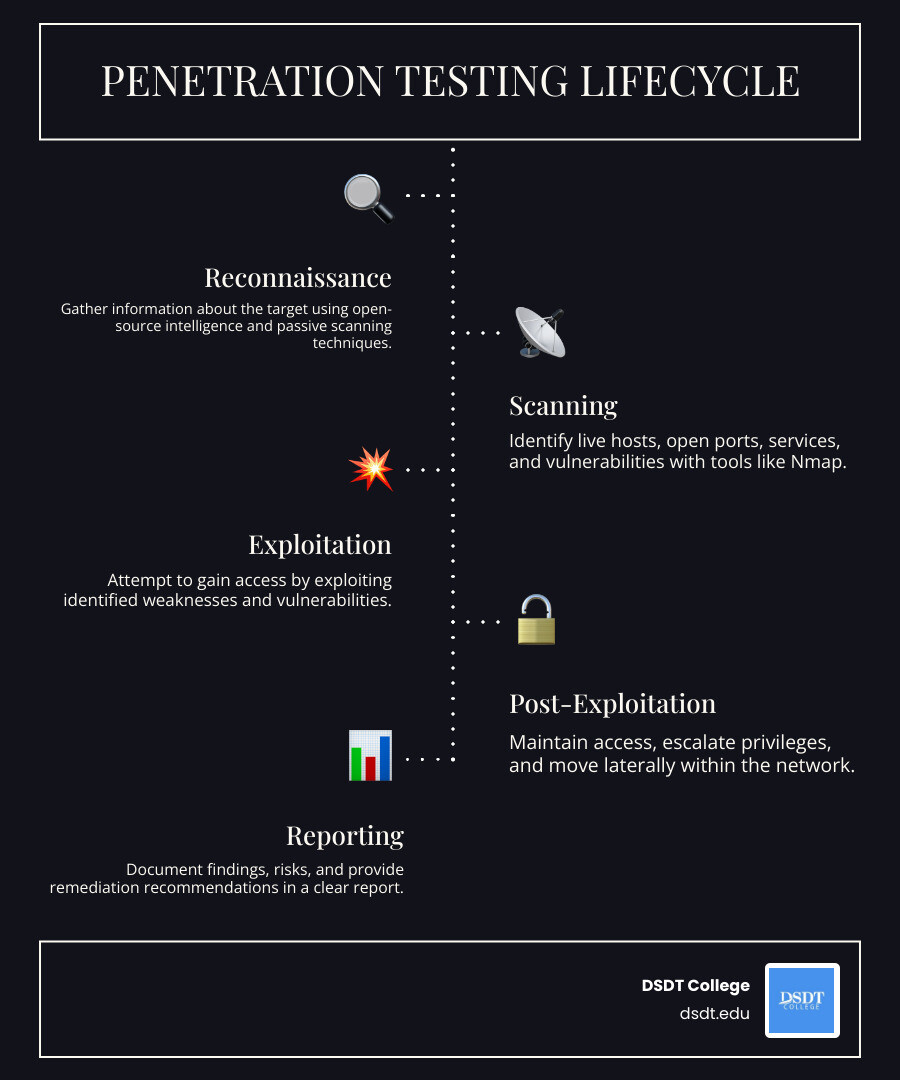
This tutorial walks you through a complete professional workflow:
- Lab Setup: How to build an Active Directory lab in Windows.
- Network Security: Using tools like Nmap for scanning and enumeration.
- Exploitation: Mastering techniques like LLMNR Poisoning and NTLMv2 cracking.
- Post-Exploitation: Learning pivoting and file transfers.
- Professionalism: It even covers report writing and career advice, which are often ignored in free tutorials.
TCM Security has built a massive community of over 60,000 professionals on Discord, proving that you can find high-level support without a high-level price tag.
Specialized Free Pentesting Course for Web Security
If you want to focus specifically on websites and APIs, the Web Security Academy from PortSwigger is arguably the best resource on the planet. PortSwigger makes Burp Suite, the industry-standard tool for web pentesting.
Their academy is 100% free and includes:
- Interactive Labs: Over 30 labs for Cross-Site Scripting (XSS) and 16 for SQL Injection.
- Cutting-Edge Research: Labs based on the latest research presented at conferences like Black Hat.
- Vulnerability Focus: Deep dives into JWT attacks, SSRF, and even Web LLM attacks.
Essential Skills and Tools Covered in Free Training
A high-quality free pentesting course should do more than just show you how to run a tool; it should teach you the methodology behind it. Most effective free resources focus on a core “starter pack” of skills.

- Reconnaissance & Nmap: Learning how to discover what is running on a network.
- Metasploit: Mastery of the most famous exploitation framework via resources like Metasploit Unleashed.
- Linux Fundamentals: Since most pentesting tools run on Linux (specifically Kali Linux), comfort with the command line is non-negotiable.
- Python Scripting: Learning to automate simple tasks or build custom scanners.
- Privilege Escalation: How to go from a standard user to an administrator once you’re “inside.”
Platforms like myTEEX provide free online cybersecurity courses that cover these fundamentals, ensuring you have the “boring but important” basics down before you try to hack the planet.
Practical Labs and Real-World Application
Theory is great, but pentesting is a “doing” profession. This is where cyber ranges and “Capture the Flag” (CTF) challenges come in. These are isolated environments where you can legally practice attacking systems.
Many free courses now structure their learning around the MITRE ATT&CK framework or the Penetration Testing Execution Standard (PTES). This ensures that your practice mirrors real-world engagements. For example, the Introduction to Security course at CTU Prague (9th successful year!) allows students to use a local or cloud-based cyber range to practice both red team (attack) and blue team (defense) skills.
Learning to write an Executive Summary is just as important as the hack itself. If you can’t explain the risk to a business owner, the pentest has no value. Free resources that include report templates and walkthroughs are worth their weight in gold.
Transitioning from Free Resources to Professional Certification
While a free pentesting course provides the technical foundation, professional certification validates those skills for employers. DSDT College facilitates this transition by preparing students for the CompTIA PenTest+ exam.
For transitioning service members, we offer a strictly in-person Cybersecurity CSP/SkillBridge program at Fort Hood. Additionally, our Information Technology Associate Degree and Technology Professional 6 Program provide accelerated, accredited paths to help you move from hobbyist to hired professional without the hurdle of waitlists or standardized testing.
Frequently Asked Questions about Free Pentesting Training
Are free pentesting courses enough to get a job?
They are a fantastic start, but usually, they aren’t enough on their own. Most entry-level jobs look for a combination of practical skills (demonstrated via a portfolio or GitHub) and a recognized certification like PenTest+ or Security+. Use free courses to build your skills, then get certified to prove them.
Do free courses provide certificates?
It depends. Some platforms like Security Blue Team offer a “taster” certificate. Others, like Coursera, allow you to “audit” the course for free but require a fee for the verified certificate. However, the knowledge you gain is always more valuable than a digital badge.
What are the prerequisites for starting?
You don’t need to be a math genius, but you should have a solid grasp of networking basics (IP addresses, ports, protocols) and be comfortable using a command line. A problem-solving mindset is the most important tool in your kit.
Conclusion
Breaking into cybersecurity is achievable through the wealth of free resources available today. From YouTube tutorials to interactive labs, the tools to become an ethical hacker are at your fingertips.
When you are ready to turn those skills into a career, start your Cybersecurity Professional Program today and let’s get to work.